

Effrinagh bonfire night celebrates music, folklore and local history
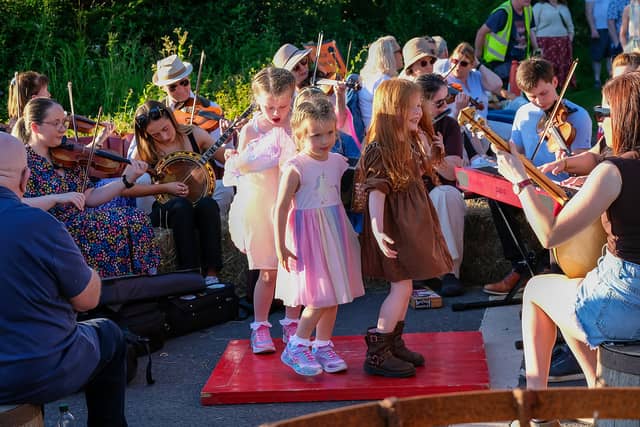

Traditional music, Sean-nós dancing and the lighting of the annual bonfire brought the community together to celebrate an ancient Midsummer custom and remember Jimmy Gralton's historic homecoming.
The annual Effrinagh Crossroads bonfire not only revives an ancient Irish Midsummer tradition but also commemorates the celebrated homecoming of Leitrim activist Jimmy Gralton.
Effrinagh Crossroads was transformed into a vibrant hub of music, dance and living history on June 23 as the local community gathered for its annual Bonfire Night celebration.
Organised entirely by local community members, the event revived the age-old Irish tradition of Midsummer fires, attracting families and visitors from across Leitrim to mark the longest days of the year.
Renowned local dancer, choreographer and cultural archivist Edwina Guckian played a central role in the festivities. Through her work with the Áirc Damhsa Culture Club and The Year in Ireland project, she helped spearhead the evening's traditional arts showcase.
The crossroads echoed to the sounds of fiddles and flutes, while Sean-nós step dancing helped keep alive the ancient communal spirit of the traditional crossroads dance.
The annual gathering at Effrinagh Crossroads has become closely associated with the memory of Jimmy Gralton, the Leitrim socialist and community activist whose return to his native area in the 1930s was famously marked by a huge bonfire. That historic homecoming continues to be remembered through the annual celebration.
The tradition of lighting fires on June 23, known in Ireland as Bonfire Night or Oíche an Tine Chnámh, has its roots in ancient pre-Christian festivals associated with the Summer Solstice.
Historically, such fires were lit in honour of the Celtic goddess Áine, with communities seeking blessings for a good harvest and protection from bad weather and disease.
Following the arrival of Christianity, the festival became associated with the feast day of St John the Baptist.
The word bonfire itself originates from the Middle English term banefire, meaning a fire of bones. In ancient times, cattle bones from the spring slaughter were placed in communal fires. The smoke and ashes were believed to possess protective qualities, with farmers driving cattle through the smoke or spreading the ashes across fields in the hope of ensuring fertile soil and healthy livestock.
Speaking about the importance of the event, Edwina Guckian said: “It gives the community a chance to remember times gone by, to celebrate our unique folklore, and to ensure that the songs, steps, and stories that belong to these crossroads are passed down to the next generation."
As darkness fell over Leitrim, the bonfire illuminated the surrounding landscape while music and celebrations continued late into the night, maintaining a tradition that stretches back thousands of years.