

Gardaí ‘dealing with more mental health interventions than ever’
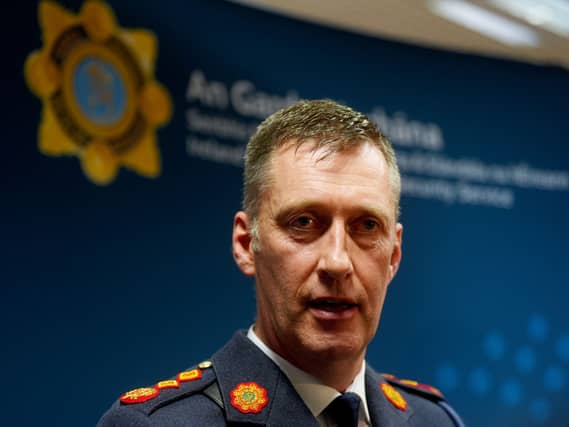

Commissioner Justin Kelly said mental health interventions are taking gardaí away from frontline policing.
Gardaí are dealing with more mental health interventions than ever, Commissioner Justin Kelly has said, noting it takes members away from “frontline mainstream policing for considerable amounts of time”.
The chairwoman of the Policing and Community Safety Authority has said she does not believe the public understands the percentage of garda time taken up by mental health matters.
Dr Elaine Byrne told a public meeting of the authority in Breifne College, Cullies, Co Cavan, that she was “very struck” by the diligence taken by local gardaí in such cases, adding that they go “above and beyond”.
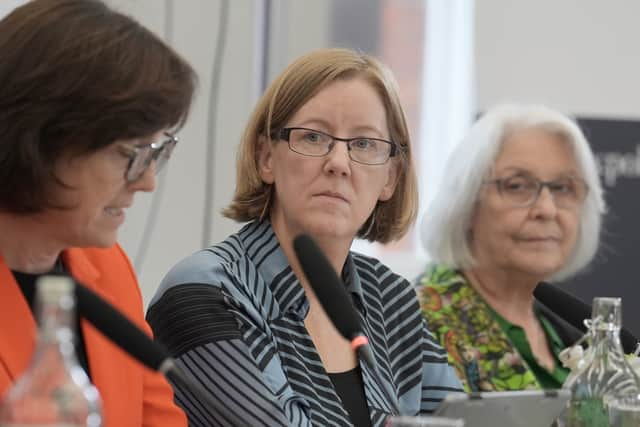
Mr Kelly agreed and told the meeting that gardaí across the country face “non-core policing issues” such as dealing with people with mental health issues in traumatic situations “all the time”.
The authority heard that gardaí could return to other duties faster if delays in follow-on medical assessments were sped up.
In Cavan alone, Mr Kelly said gardaí dealt with a traumatic incident involving mental health issues where someone is taken into custody every 40 hours.
He said incidents could relate to suicide or attempted suicide as well as fatal road traffic collisions.
As an example, the Commissioner said that even “relatively straightforward” cases of Section 12 of the Mental Health Act where someone is brought into custody could take four to six hours to have them processed, before spending another six hours in a facility trying to get them help.
Alan McGovern, Chief Superintendent for Louth, Cavan and Monaghan, identified three challenges around garda time in dealing with such cases.
He said: “Gardaí can spend a considerable amount of time waiting for a doctor to come to the station.
“Secondly, if somebody is taken to the mental health facility, gardaí can face further delays while waiting for the person to be assessed.
“And thirdly, if the doctor decides not to recommend the person to be admitted to the mental health facility, the Act says that the person should be released from custody immediately, even though we may still have genuine concerns for their wellbeing.”
Mr Kelly said if the follow-on system of medical assessment was more efficient, it would “certainly free our officers up to go back on duty”.
The Commissioner said the mental health interventions arise when gardaí come across people behaving erratically on the street or when parents call for assistance to deal with children in their home, which he described as a “very common occurrence”.
He said gardaí take action if there are reasonable grounds to believe there is mental health disorder and imminent risk, adding that people are not taken into custody to prosecute them but rather to “resolve those situations”.
Dr Byrne suggested to the Commissioner that these interventions did not “sound like policing in some cases”.
He responded: “You’re absolutely right, and I think it’s obviously well known that there are considerable strains and stresses in our health system.
“But while it certainly takes us away from frontline mainstream policing for considerable amounts of time, at the moment the way we certainly view it is there is no alternative to what we do at the moment, and I think the people of Ireland they expect us to deal with things.”
Mr Kelly said gardaí “go above and beyond”, and added: “But it’s what, I think, it’s what the public expect us to do and sometimes we have to fill those gaps.
“And the reality is, with the stresses on health services at the moment – you know, sometimes there isn’t an alternative.”
He added: “What is new is there’s certainly more of this than there ever has been.”
Asked by authority member Mick Feehan if these matters should be delegated to someone else, Mr Kelly said people “expect the guards to come”.
He said: “The reality is, at three o’clock in the morning, as you all well know, if a call comes in someone is in the middle of a junction, a pedestrian, they’re behaving erratically, there are dangers to themselves.
“The only people that are going to respond to that are going to be An Garda Síochána.”