

'I can't take any more' - Warning over tiny insects that live on your face
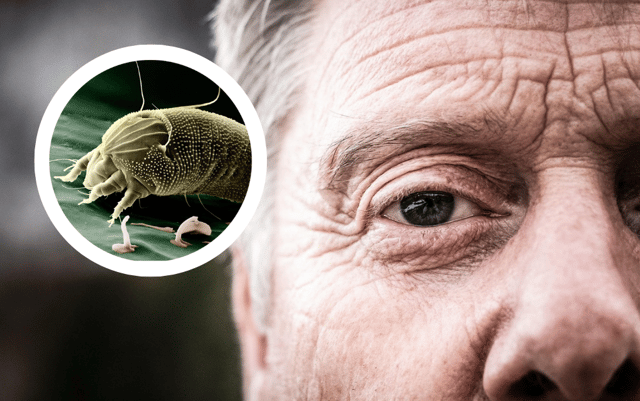

RTÉ listeners left squirming as immunology expert lifts lid on microscopic creatures
Irish radio listeners were left itching and squirming after a leading professor revealed that tiny insects actually live on your face.
The revelation came during The Brendan O'Connor Show on RTÉ Radio 1 last Saturday morning, when Christine Loscher, Professor of Immunology at DCU, joined the host to discuss allergies.
Before the big reveal, the pair had already unsettled listeners by discussing dust mites, microscopic, spider-like creatures that thrive in warm, humid homes.
Professor Loscher explained that they feed on shed skin cells, multiplying in bedding, carpets and even children's toys. Their waste, she said, contains proteins that trigger allergic reactions, meaning many people notice more sneezing and watery eyes when changing sheets or cleaning.
She described how female dust mites can lay up to 200 eggs at a time, leading to exploding populations in winter as households close windows and switch on the heating.
O'Connor groaned as he learned that their favourite spots are pillows, duvets and sofas - anywhere "cosy and humid" where skin cells settle.
But if dust mites weren't disturbing enough, O'Connor then asked if there were mites that lived directly on people's bodies, and that's when things really took a turn.
"Yeah, we have little mites that live on our face," Prof Loscher confirmed. "They're different [from dust mites] in that they have to live on the human body in order to be able to survive. These actually have to physically live. So they're more like parasites where they have to live on the human."
She explained that the microscopic creatures tend to live on the face and in eyelashes. Worryingly, they can also be passed from person to person through physical contact.
The creatures in question are Demodex mites, tiny parasites that spend their lives living in human skin and hair follicles.
"They tend to live a lot on the face; they tend to be kind of in your eyelashes; and they tend to cause a lot of irritation on the face, around the eyes, that kind of irritation.
"So they're somewhat the same, but they're actually quite different, and they can be passed from one person to another by physical contact.
"So unless they're living on your skin, they're not able to survive," Prof Loscher added.
At that point, O'Connor had heard enough.
"Okay, I can't take any more. Thank you very much for that, Professor Christine Loscher. I'm now wiping imaginary mites off my face," he said, before cutting to a break.