Family of man washed up on Leitrim beach 40 years ago may be 'afraid to get to involved'
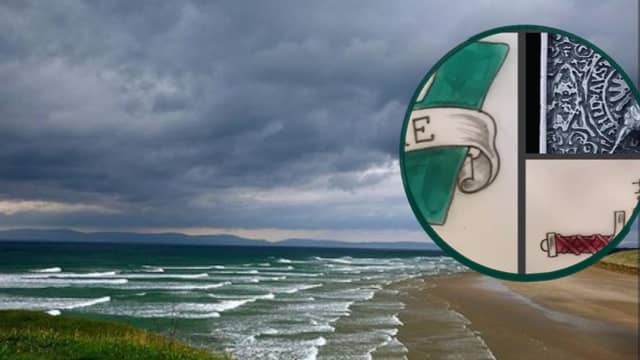
Knockbrack, at Tullaghan Strand where the body was foundplaceholder image
Knockbrack, at Tullaghan Strand where the body was found

Former Garda diver: "I found it very strange that a body would be available for a family to mourn and grieve and and nobody would claim the body."
Forty years after a deceased man was found on a Leitrim beach, efforts are still being made to identify the man and connect with his family. 
In May 1986, a man's body was found on the Leitrim coastline at Knockbrack, at Tullaghan Strand.
Speaking to Oceanfm's Niall Delaney, former Garda diver, Jim Brennan, told listeners: "I found it very strange that a body would be available for a family to mourn and grieve and and nobody would claim the body."
He noted that the remains were exhumed in 2021 for DNA testing in an attempt to identify the man but these efforts failed to produce any results. 
Mr Brennan continued: "I think about it quite a bit because if it was a political action that ended up with him in the water, I would have thought there would be a bullet involved or his hands or legs would be tied together."
He added that the post-mortem found that there "were no injuries or it would have been a murder investigation". 

READ MORE: Garda host drop-in clinic in Leitrim town

Mr Brennan said he didn't believe that the death was a result of the man attempting to take his own life. "If he had fallen into the sea in the place he was found, there are very steep cliffs and there would have been damage to the body. 
He continued: "If it was a suicide, surely some family member would have been trying to trace him unless they weren't watching or listening to media outlets. placeholder image
Forty years after a deceased man was found on a Leitrim beach, efforts are still being made to identify the man and connect with his family.  In May 1986, a man's body was found on the Leitrim coastline at Knockbrack, at Tullaghan Strand. Speaking to Oceanfm's Niall Delaney, former Garda diver, Jim Brennan, told listeners: "I found it very strange that a body would be available for a family to mourn and grieve and and nobody would claim the body." He noted that the remains were exhumed in 2021 for DNA testing in an attempt to identify the man but these efforts failed to produce any results.  Mr Brennan continued: "I think about it quite a bit because if it was a political action that ended up with him in the water, I would have thought there would be a bullet involved or his hands or legs would be tied together." He added that the post-mortem found that there "were no injuries or it would have been a murder investigation".  READ MORE: Garda host drop-in clinic in Leitrim town Mr Brennan said he didn't believe that the death was a result of the man attempting to take his own life. "If he had fallen into the sea in the place he was found, there are very steep cliffs and there would have been damage to the body.  He continued: "If it was a suicide, surely some family member would have been trying to trace him unless they weren't watching or listening to media outlets. 

He said that DNA samples are only beneficial in tracking down relatives if they too are on the database. "If a relation isn't on a database, there is no way of connecting them."

The man’s estimated age was between 30 and 50 years and he was between 5ft 4in and 5ft 7in in height.

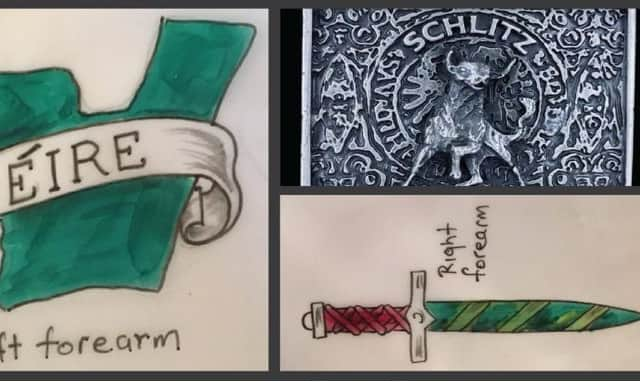
Mr Brennan noted that the man had "distinct" tattoos including a green shamrock, a dagger with a red handle in a green scabbard, two thin rapier-­like swords with red handles crossed in front of a green heart-like or shield shape as well as the word “ÉIRE”  tattooed in front of a green-­coloured shape.

He also had a belt with the buckle bearing the words “Malt Liquor” and “Schlitz” or “Schlutz”, and a picture of a dog or bull.

Mr Brennan noted that in the case of the disappearance of six-year-old Mary Boyle, "the body has never been found for the family to grieve but this body has been found and nobody is prepared to grieve for it - they're either ashamed of the man or afraid to get involved."

After the post-mortem, the man was buried at St Clare’s Cemetery, Manorhamilton. "I go to the grave an odd time to say a prayer for the man; it's sad to see that there are graves alongside that are very well decorated and this little patch with no recognition of who's there or why he's there."

He added: "It's sad; I'd say if the family came to see it, it would probably move them to tears to see the state that their relation has been kept in for such a long time. It's very very sad."

He concluded that he believed it is possible that the man may still be identified. "DNA is making progress every year and you see people being found after 30 and 40 and even 55 years ago."

Anyone with any information should contact Manorhamilton garda station (071) 982 0620, the garda confidential line on 1800 666 111, or any garda station.

Related topics:
Powered by
Register
Follow us
© 2026 Formpress Publishing LTD. All rights reserved.Cookie SettingsTerms and ConditionsPrivacy notice