

Leitrim farmers urged to check winter fodder supplies amid pressure on feed stocks
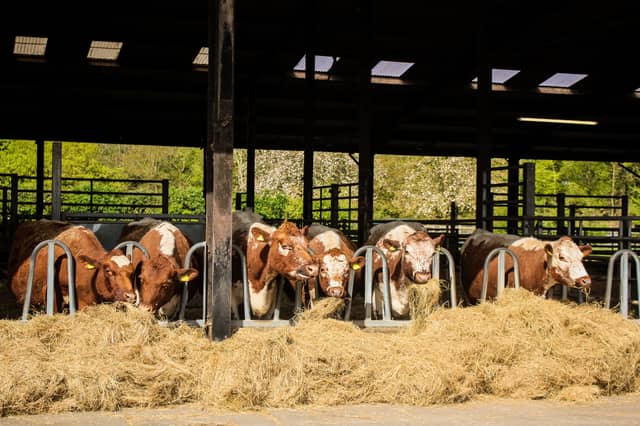

Leitrim farmers are being urged to assess their winter fodder supplies early, with the latest Teagasc survey showing varying levels of feed availability across farms in the Northwest region.
Leitrim farmers are being urged to assess their winter fodder supplies and take action early if they face a potential shortage, following the latest Teagasc survey of feed stocks on farms.
The survey was presented to the National Fodder and Food Security Committee on Friday, August 21, amid ongoing drought conditions in many parts of the country. Teagasc advisers have been completing preliminary winter fodder budgets for dairy and drystock farmers in recent weeks as part of an ongoing advisory programme.
The survey data was collected from farms in early August, after the majority of planned second silage cuts had been completed. However, second cuts did not materialise for numerous participating farms this year due to drought, which is reflected in the results. Leitrim is included in Teagasc’s Northwest region, alongside Donegal, Galway, Mayo, Roscommon and Sligo.
Across the Northwest, 12% of farms surveyed had surplus feed, while 34% were on target for winter fodder supplies. A further 27% had a deficit of less than 10%, while 17% had a deficit of between 10% and 20%. Ten per cent of farms in the region had a deficit of more than 20%.
Nationally, 11% of farms surveyed had surplus feed, with 31% on target. A further 27% had a deficit of less than 10%, while 19% had a deficit of between 10% and 20%. Twelve per cent had a deficit of more than 20%. The survey found an average of approximately 140 days of feed available on farms nationally. When analysed by enterprise, 12% of dairy farms and 10% of drystock farms reported shortages of more than 20%.
Joe Patton, Teagasc Survey Co-Ordinator, said the latest returns showed a tighter supply of feed nationally compared with recent years.
“Teagasc has conducted fodder surveys annually over the last decade, and this year’s returns show a tighter supply of feed nationally compared to recent years. This is especially the case in the south-eastern counties, where a proportion of farms have used up feed surpluses and are now facing into deficit situations. We encourage all farms to complete a budget and to review and update their own situation in good time.”
Michael O’Donovan, Teagasc Grassland Science, said the feed budgeting function in PastureBase Ireland was proving useful in assessing winter feed stocks.
“Our results indicate that farms have an average of 140 days’ feed supply on hand, but the range is quite large so there is a need to look at farms on a case-by-case basis.
“It is important now to plan fertilizer applications and autumn rotation lengths to capitalise on grass growth recovery when the rain arrives.”
Tom Curran, Head of Advisory Services in Teagasc, said the survey showed a variable supply of conserved feed on farms.
“The survey confirms that nationally there is a very variable supply of conserved feed on farms. This is no surprise given the high levels of forage fed in many cases across the summer. Challenges exist across drystock and dairy farms alike and it is clear that actions to improve supply, or reduce demand, will be essential.
“Numerous options are available and our Teagasc advisors will help with these decisions. Finally, Teagasc would like to thank the farmers who participated in the survey.”
The National Fodder and Food Security Committee has encouraged livestock farmers to establish their fodder position now through a winter feed budget and to seek assistance from an adviser where required.
Farmers facing potential shortages have also been advised to identify feed gaps early and consider the availability and cost of straw, hay, silage and other locally available forage sources, together with suitable high-fibre concentrate feeds or alternative feeds that can safely offset forage deficits in winter diets.
The committee also advised farmers to manage autumn grass carefully, plan slurry applications and assess the financial implications of any additional feed purchases or other costs.
The committee said the situation would need to be kept under review over the coming weeks as the impact of rainfall, grass growth recovery and autumn fodder production becomes clearer.