

Ballinamore residents call on Department of Justice to halt asylum accommodation


Meeting with Department of Justice expected this week
A crisis meeting was held in Ballinamore last night where townspeople showed up to stand together and express their "grave concerns" about the re-housing of 130 asylum seekers in newly refurbished apartments.
In a statement the group of about 200 people said they welcome all people to the town, but they point out that "Proportional norms, when it comes to the resettlement of refugees or asylum seekers, is recognised as being between 1 and 2% of population. The numbers being considered for Ballinamore exceed 15%."
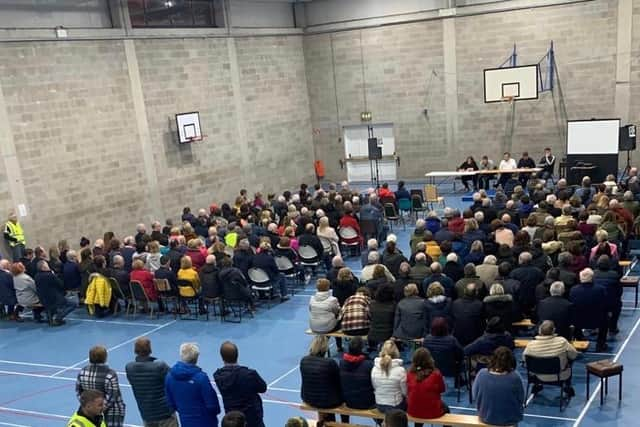
Packed meeting in Ballinamore Sports Hall last night
The spokesperson for the group said "Let us be clear, there are only two types of people who are not welcome in Ballinamore; Racists and People Traffickers whose aims are to maximise profits on the backs of those less fortunate."
They are calling on the Department to halt these proceedings immediately and to listen to the people of Ireland and "re-evaluate its policies on provision centres across the country."
A meeting will take place on Thursday this week, in Leinster House Dublin, with community and political representatives from Ballinamore Co Leitrim and Minister David Stanton along with Government officials.
The meeting will discuss concerns for services in Ballinamore, arising from the provision of asylum seeker accommodation in the town.
Sinn Féin TD Deputy Martin Kenny organised the meeting and said officals from Justice, Education and the HSE will attend and deal with concerns and pressure on services.
Deputy Kenny said, "I expect that some clarity will be forthcoming from the Government on the number of families and arrangements with schools and childcare facilities etc. There was a desire expressed at the Wednesday night meeting, that these families would come on a phased basis and I have been assured that that will be discussed.
"I have also been made aware of a €50,000 grant to assist with community facilities and integration of the new people into the area.”