

Inside Leitrim’s changing rural pub culture


Once the centre of rural life, Leitrim’s pubs are facing rising costs, fewer drinkers and changing social habits. Five rural pubs reveal what has changed — and what could disappear with them.
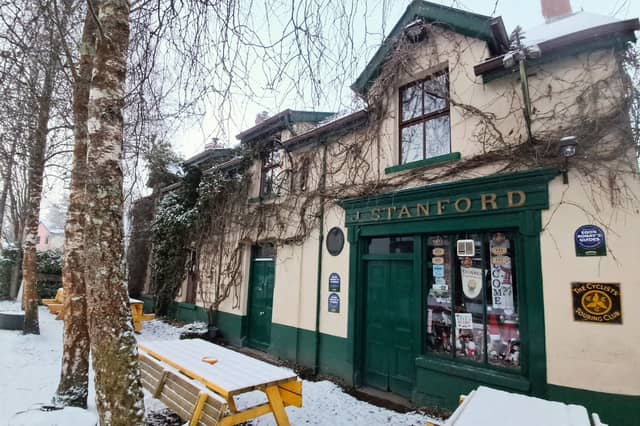
Stanford Inn, Dromahair
A 300-year-old pub that has survived six generations now has to reinvent itself to survive the next one
At Leitrim’s oldest pub, Fergus McGowan believes the Government needs to do far more to protect small family-run businesses.
“It’s as if the Government have left small business to paddle their own canoes, and they’re not interested in them. They’re only interested in the bigger fish nowadays,” he says.
Stanford Inn dates back to the early 1700s and has remained in the same family for six generations.
“My mother was Stanford,” Fergus says. “I keep the pub name the same, Stanford.”
He believes historic family pubs operating on low margins should receive specific Government support, including relief from commercial rates.
“They need to come up with a sort of a plan for older businesses,” he says. “They’re turning over low income and they’re family-owned and they’re working at losses all the time.”
An exemption from rates, he believes, could help keep them alive.
“That would be a massive thing for old businesses, old family-run businesses, and give them a big lift for the future. Little bits mean a lot to small businesses.”
The Dromahair Fergus remembers growing up in had six pubs despite having around 1,000 fewer people than today.
“In those days, people didn’t travel far,” he says.
“It was a social outlet years ago where people met and interacted and had to do business and contact people. There was no phones or any of that sort of thing.”
Now the challenge is getting enough people through the door to cover the cost of opening it.
“Rates is crazy in Leitrim,” Fergus says. “There have been rates, electricity charges. The VAT is 23%, which is far too high for pubs.”
“There’s a certain level that you have to meet before you break even. Even that’s the problem with all the small pubs now. They can’t meet the break-even targets.”
Family-run businesses often survive because the people operating them are not drawing proper wages.
“When you’re trying to open, like, in a small family business, you’re open seven days a week because you’re not paying yourself any wages,” he says.
That reality is forcing pubs to reinvent themselves.
“Old pubs are going to have to try and do some sort of food entity, accommodation.”
Stanford Inn has one advantage — more than 300 years of history — which Fergus uses to attract overseas visitors.
“Ours is a bit unique, that we have a tourist attraction so old, so we’re able to attract a lot of the foreign tourists,” he says.
He believes North Leitrim lost visitors after the Wild Atlantic Way drew tourists further west, but says some are beginning to return.
“We’re starting to get people back from the Wild Atlantic Way. You have to be creative and market your own ideas and how to get people back again.”
Younger customers have changed too.
“It’s more so coffee and food,” he says.
“When there’s an event on, you will see youngsters start to come out a little bit later, but they will drink at home first and then they’ll come out late.”
He points to the wider cost of living, with young people trying to save for homes, as well as a greater focus on fitness and health.
“It’s not like years ago where you’d see people in the pubs every night,” he says. “You’d see youngsters around having a few pints after work in the evenings. That doesn’t exist anymore now at all.”
Yet recently he has noticed a small change.
“They suddenly realise what they’re missing out on when they go to smaller pubs and see there’s a bit of craic there and there’s a bit of chat and the phones are left to one side.”
Despite the pressures, Fergus remains optimistic.
“You have to be positive,” he says. “A lot of small business are trying their own little thing and trying to be a bit more unique in how they approach it and trying to adapt outside the box.”
Farrelly’s Pub, Carrigallen
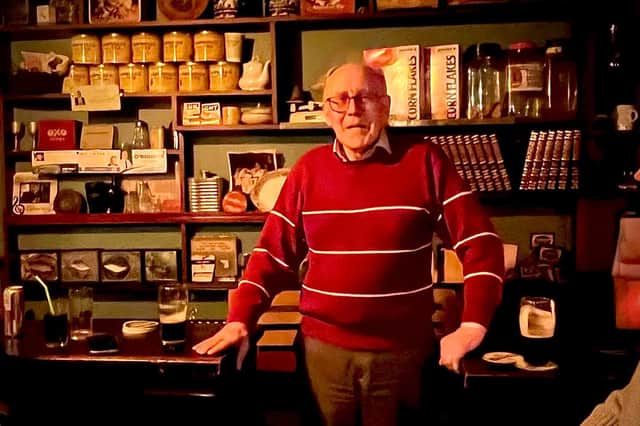
There was a time when a deal made on the street in a Leitrim town wasn’t necessarily finished until the two men involved walked through the door of a pub.
Cathal Farrelly remembers it.
Growing up around the family business in Carrigallen, the pub was only one part of an operation that also included a grocery, hardware, petrol, a bakery, agricultural supplies and even fine Delft transported across the region by horse and cart.
Fair days brought farmers, horse dealers and cattle buyers into the town and, when the business outside was done, the bar filled.
“After there were deals done in the fair, you’d come into the pub, and everyone treated one another,” Cathal recalls.
Sometimes the deal wasn’t finished at all.
“If the deal wasn’t finished, it’d be finished in the pub.”
It is a small memory of a much bigger role once occupied by the Irish pub. For generations, particularly in rural counties like Leitrim, it was where news was exchanged, business conducted, music played and neighbours met.
But that world is changing.
Across Ireland, 2,119 pubs closed between 2005 and 2024 — almost one in every four that existed at the beginning of that period. The rate of decline has accelerated, with an average of 128 pubs closing annually between 2019 and 2024.
Leitrim has not escaped. Previous analysis showed 40 pubs in the county closed between 2005 and 2022, eight of them since 2019.
Energy, staffing, insurance, taxation and regulatory costs have risen, while the people on the other side of the counter have changed too.
We drink less. We drink differently. We socialise differently. And increasingly, we drink at home.
The price of keeping the doors open
At its AGM earlier this year, the Vintners' Federation of Ireland warned that rural pubs were facing an “existential threat”, saying electricity costs had risen by 70% over five years and wages by 40%.
Energy is only one bill.
Publicans have repeatedly identified staffing, insurance, commercial rates, water charges, excise and other regulatory costs among the pressures facing their businesses.
Ireland also continues to impose some of the highest alcohol excise duties in Europe.
The Government restored the 9% VAT rate for food and catering services from July this year, providing relief for pubs with substantial food businesses.
But that does little for the traditional Leitrim local that doesn't have a kitchen and may sell little more than Guinness, lager, whiskey and crisps.
Alcohol remains subject to the standard 23% VAT rate.
It leaves the smallest pubs in a peculiar position: the businesses arguably most closely resembling the traditional Irish pub are among those with the fewest ways to diversify their income.
A different generation
Few people witnessed that transformation more closely than retired Mohill publican Val Fitzpatrick.
When he arrived in Mohill in 1960, there were 25 pubs in the town.
“Every one of them was doing a bit of business,” he recalled before retiring after 64 years behind the bar.
Monthly cattle and pig fairs brought crowds into Mohill, while customers travelled from miles around to drink and socialise.
Over the decades, Val watched much of that trade move elsewhere.
“The government talks about cutting down on drinking, but then they allow cheap drinks in supermarkets while it’s expensive in the pubs,” he said.
“So what happens? People drink at home. You’ve got lads sitting in their armchairs with cans around their feet, and that’s what the youngsters see, and they go the same way. It’s not good.”
He also watched the economics of running a pub become increasingly difficult.
“Today, the public house business has been killed by bureaucracy,” Val said.
When he started in 1960 there was no VAT. By the time he retired, there were licensing requirements, energy costs and a growing list of bills.
“I had only an ordinary pub here, not a big hotel or anything, and I was paying over a thousand euros every two months,” he said of electricity.
Even putting on music came at a cost.
“And if you had a band, even two lads ripping out a fiddle, you need an IMRO licence.”
Reilly’s, Carrigallen
In Reilly’s pub in Carrigallen, Eugene Reilly has watched another change happen more quietly: the disappearance of the generation that once filled the stools.
“A lot of my customers are dead,” he says.
It is a stark explanation of one of the biggest problems facing rural pubs.
Men who once came in several nights a week for a pint and conversation have grown old and died, with fewer younger customers replacing them.
Yet inside Reilly’s, much of the old pub culture remains.
Eugene moves between pulling pints and conversation, discussing everything from politics and world events to Carrigallen characters and stories passed down through generations.
His artwork hangs around the pub alongside old photographs and memorabilia, while fires burn in the lounge and locals settle around the bar.
For Eugene, what mattered about the traditional pub was never simply what was in the glass. It was the people sitting around it.
Anderson’s Thatch, outside Carrick-on-Shannon
For all its popularity during the summer months, keeping Anderson’s Thatch going year-round is not easy.
Owner Gene Anderson admits the pub itself makes very little money, particularly once the tourist season fades.
Insurance costs him €4,700 a year, rates another €2,700, while he says there is only around 14 cent profit from a pint after costs.
“You don’t make any money here,” he says.
Instead, the B&B next door and motorhome park help make the overall business viable.
“When the three work together, it’s economically feasible.”
The doors remain open through the colder months, when the tourists thin out and the 1732 pub returns largely to its local crowd.
The fire and large Aga stove are kept burning around the clock to protect the thick old walls from damp. After darkness falls, the farmers begin to arrive.
“All them lads on Saturday night will sing, you know, and tell stories,” Gene says.
It is perhaps during those quiet winter nights that the traditional rural pub reveals what is harder to put on a balance sheet.
The road home
There is one final challenge for Leitrim’s rural pubs: getting people safely home.
Drink-driving laws transformed rural drinking culture and were necessary from a road-safety perspective, but for pubs serving scattered populations they also removed customers who once travelled several miles into their nearest town or village.
The problem is particularly acute where evening public transport is limited and taxis are scarce.
One Leitrim publican, who did not wish to be named, said two plain-clothes Gardaí followed customers leaving his premises to their cars and warned them.
“They did a lot of damage,” he said. “My customers never came back.”
Val Fitzpatrick also remembered customers once travelling into Mohill from a wide catchment across the surrounding countryside. Over time, many stopped making the journey.
The challenge is how rural communities keep intoxicated drivers off the roads without leaving people increasingly isolated at home.
Because while drinking habits have changed, the need for company has not.