

RTÉ Journalist behind famous Leitrim ‘No Comment’ report passes away


RTÉ journalist Brendan O'Brien has passed away at the age of 82
Former RTE journalist Brendan O’Brien, the reporter behind the famous ‘no comment’ RTE report in Ballinamore, passed away.
O’Brien was an award-winning investigative journalist who worked for the public broadcaster between 1974 and 2002, reporting on the IRA.
He became well known in Leitrim in 1984 for a news report broadcast on the flagship programme, Today Tonight, where he questioned Ballinamore locals coming out of Sunday mass in Corraleehan church about the Don Tidey kidnapping.
The Don Tidey affair
Don Tidey, the then director and chairman of Quinnsworth supermarket, was kidnapped by the IRA from his home on Stocking Lane, Rathfarnham, on November 24, 1983.
This led to the largest manhunt in the history of the State, with thousands of Gardaí and Army personnel enlisted in the search, and the killing of two young Gardaí.
Kidnap-for-ransom was a tactic in vogue with the IRA at that time, as they had kidnapped Ben Dunne Jr, son of the founder of Dunne Stores, Ben Dunne Sr, two years previously and, before that, the Dutchman Tiede Herrema.
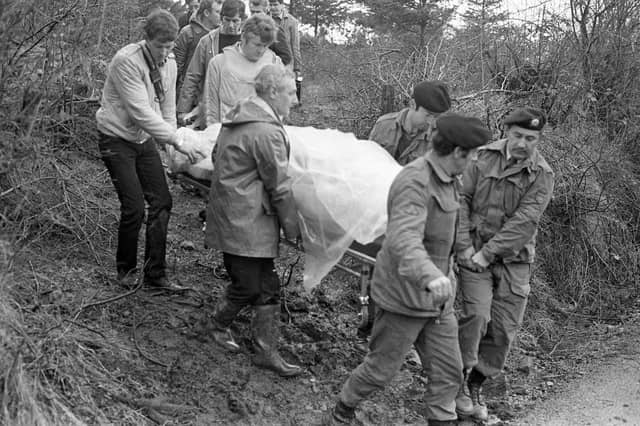
Tidey’s kidnappers, who were from the north, were traced to the remote Derrada Woods outside Ballinamore, and the town was surrounded by a ring of steel.
Pte Patrick Kelly (36), a father of four from Moate, Co Westmeath, and Garda recruit Gary Sheehan (23) were killed by members of the IRA after they stumbled upon their hideout during the search.
The captors opened fire on the Gardaí, and in the commotion of the shooting, Don Tidey managed to escape.
In the aftermath, the IRA men escaped despite the huge number of Gardaí and military personnel present in the area. No one was ever convicted for the killing of the Gardaí.
It was presumed that the kidnappers were aided by local members of Sinn Féin and the IRA, though this was never proven.
The report
In the report, O’Brien asked a group of men about whether they would have told the Gardaí or not if they had information relating to the kidnapping.
Given the proximity to the border and that this was at the height of the Troubles, questions were unsurprisingly met with many variations of “No comment.”
The locals had filed out of the church after the mass, and some had congregated around the outside wall.
O’Brien, along with the camera crew, went from person to person asking questions.
O’Brien: “What do you think about the whole business of the Tidey kidnap?”
First man: [Says nothing and shakes his head.]
O’Brien: “You don't think very much. You’ve got nothing to say. What about this man here? Hello, why are you walking away? Would you have phoned the gardaí if you knew anything?”
Second man: “I have nothing to say at all about it. I don’t wish to comment on it at all.”
O’Brien: “Would you have informed the gardaí?”
Second man: “You’ve asked that question several times already.”
O’Brien: “Well, would you?”
Second man: “I don’t know whether I would or not.”
O’Brien: “You don’t. Would you have phoned the gardaí if you knew something suspicious was going on?”
Third man: “I have no comment to make at all.”
O’Brien: “Would you have informed the gardaí if you knew somebody was being held kidnap around the place?”
Third man: “I said no comment.”
Fourth man: “I have no comment, no comment whatsoever.”
O’Brien: “Why not? Do you support Sinn Féin?”
Fourth man: “No comment.”
O’Brien: [Speaking to a child] “Would you inform the gardaí?”
Young boy: “No way.” [Laughing]
O’Brien: “Would you, sir, would you inform the gardaí?”
Fifth man: “No comment to make.”
O’Brien: “You said you wouldn’t inform the gardaí. Why not?
O’Brien: “What about you, sir, would you inform the gardaí?”
Sixth man: “No comment.”
O’Brien: “Why not? Was it not the right thing to do?”
Sixth man: “I couldn’t say. I don’t know what is the right thing to say.”
O’Brien: “What do you think is the right thing to say?”
Sixth man: “Well, I couldn’t tell ya.”
Another significant moment in O’Brien’s career was when he followed criminal Martin Cahill, known as The General, confronting him in the streets of Dublin.
Following his retirement from RTE, he lectured on the Northern Irish conflict and the peace process.
He also had a career as an author, writing: 'The Long War: The IRA and Sinn Féin.'
O’Brien passed away at the age of 82, he is survived by his wife, five children, and three grandchildren.