

Leitrim wind farms: Poor dialogue with communities is slowing Irish wind energy growth

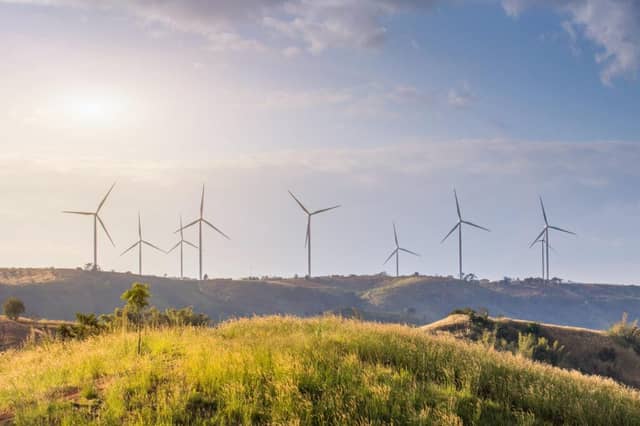

‘We have a terrible way of talking about these things’
Communities at the centre of wind farm debate
Ireland sees wind farms as a way to meet its climate targets and drive down energy costs, though, like many other areas of public life, the country is struggling to build its way out of this problem.
In the midst of a cost of living crisis, a volatile fuel market, and a climate crisis that is bad news, given the island's potential to produce more affordable clean energy.
At present, around a third of the nation's electricity is supplied from wind energy; the rest comes from a variety of other sources but predominantly natural gas.
Wind energy takes time and millions in initial investments. It can take up to a decade to get an on-shore wind farm project from the idea to the construction stage, with the planning application alone costing hundreds of thousands.
Meanwhile, offshore projects can cost significantly more and have been logistically much more difficult to facilitate due to the lack of a clear marine bed planning process, with only one project currently operating.
‘People will often say wind is cheap. That's not true. Wind costs money,’ said Paul Deane, sustainable energy systems expert and Senior Lecturer at the University College Cork’s School of Engineering and Architecture.
Deane argues that the energy produced by wind is ultimately cleaner and cheaper than fossil fuel generation.
“Whether it's natural gas or coal or peat or nuclear or renewables. You always have to have these trade-offs. We would love to have everything kind of out of sight and out of mind, but unfortunately, the world doesn't work that way. ”
A significant problem is projects will be built near established communities, which, in many instances around the country, is fine but in others can pose a tremendous challenge to getting a project over the line.
‘We have a terrible way of talking about these things,’ said Deane, who explains that the tension that exists between communities and companies that wish to carry out these development projects can often be trivialised as NIMBYism, but that genuine concerns can be lost.
Those questions are particularly relevant in counties such as Leitrim, where proposals for wind energy developments have sparked debate over landscape, community benefit and the future of rural development
“ I think it's better to engage with communities. I think listening to communities about what they want from a project, what they want out of a project or whether they don't want a project at all. You know, that's the big part of it.”
‘Wind farms are large industrial facilities that are often kind of put into rural locations, but there's always going to be a mismatch.”
For companies, it is about putting time into picking a site that is not ecologically sensitive, making sure it works visually in the area and then liaising with the public.
“Working with communities to try and get that support is really important because if there are less objections, the projects tend to get through quicker.”