

Official opening of €5million National Famine Museum in Strokestown


The new National Famine Museum at Strokestown Park House and Gardens, in Co. Roscommon was officially opened by the Minister for Tourism, Culture, Arts, Gaeltacht, Sport and Media, Catherine Martin.
The new Museum has been noted as a "flagship" for the North West and its success with national and international visitors will also help boost Leitrim and the region as a whole.
Fáilte Ireland’s grant of €3.9million is one of the largest ever investments in a visitor attraction in Ireland’s Hidden Heartlands. According to Fáilte Ireland’s analysis The National Famine Museum at Strokestown Park House and Gardens is expected to attract 115,000 visitors annually generating an additional €25million for the local economy within ten years of opening post investment.
Following the investment, The National Famine Museum at Strokestown will provide 26 jobs (directly employed in full time, seasonal and part-time jobs) and this investment will also indirectly lead to a further 65 sustainable jobs within the wider tourism sector and economy, over the next 10 years.
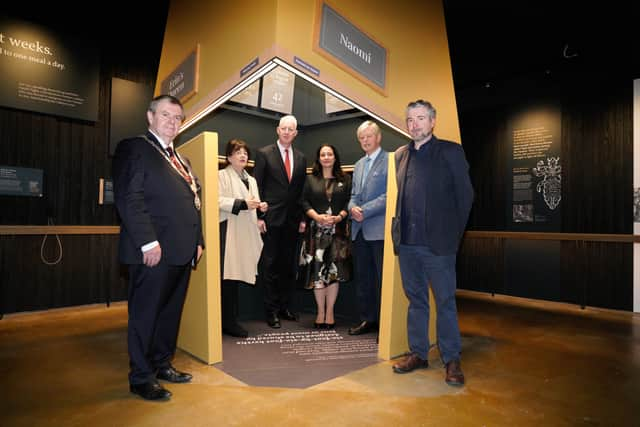
Cathaoirleach of Roscommon County Council Tom Crosby, Ann O'Donoghue Irish Heritage Trust, Paul Kelly Fáilte Ireland, Minister Catherine Martin, Jim Callery, Director of Westward Holdings and John O'Driscoll General Manager
General Manager John O'Driscoll who lives in Mohill told the Leitrim Observer that Stresokestown Park House and National Famine museum is only "a half hour from parts of Leitrim" he said the grounds includes everything for a family to spend the whole day visiting. He noted that Strokestown has now been added to a number of itineraries for large international and national tour groups. He added that the team are always bringing new events and refreshing the experience so people can come back and visit over and over again.
Minister Catherine Martin said “The National Famine Museum is an important addition to the visitor experience both locally and nationally and will serve to engage and educate visitors from at home and abroad and preserve the stories of The Great Irish Famine.”
Jim Callery, Director of Westward Holdings said: “It is wonderful to be here today 43 years after I found the Famine Plea from the Tenants of Cloonahee - the townland I was born and reared in and where I still live today - when I first explored the house in 1979. This document saved Strokestown Park and its Archive. The Museum tells the story of the Great Famine with a new perspective and will also, I hope, help people to understand that our past is someone else's present, as is evident in the mass migration of today. I applaud the marvellous recent regeneration and I am glad it is in the safe hands of and under the care of the Irish Heritage Trust."
Important conservation works to the Palladian Mansion have also been completed to ensure this important 200-year-old heritage site will be preserved for future generations. Artefacts and documents from Strokestown’s extensive archive, which is home to the largest collection of material relating to the Great Famine, are showcased throughout the new museum including the Cloonahee Petition.
The National Famine Museum | Strokestown Park is open 7 days per week / 360 days of the year and tickets can be pre-booked online at https://strokestownpark.ie/