

BIG INTERVIEW: Leitrim's Damian Brennan on Cloone, community and the changing face of politics

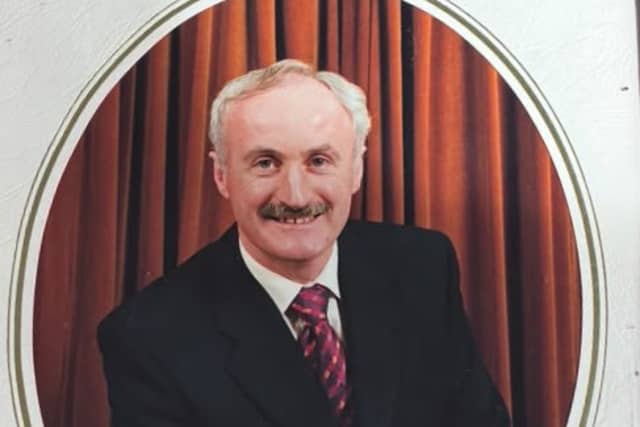

Damian Brennan reflects on the village he grew up in, the community projects he helped deliver and the changing political landscape of Sligo–Leitrim.
Damian Brennan can remember Cloone before the community centre, before the GAA club had a field of its own, and before electricity reached his family home in Cornulla. At night, a Tilley lamp hung from the kitchen ceiling. Smaller lamps and candles lit the way to bed. His family, like many in the parish, grew vegetables, kept hens and pigs, and made butter from their cows’ milk. What was left went to the creamery.
The village was the centre of everything. It had churches, shops, pubs, a Garda barracks, a forge and two fair greens. On fair days, Damian and other children got time off school to walk cattle into Cloone and mind them while they were sold.
But for many young people, staying was difficult. “The farms were very small and would support one young person only,” he recalls. “People moved to urban areas in Ireland and abroad, in search of work. They would then send back money to enable brothers and sisters to follow them. Many of them never returned to Ireland.”
Damian did leave for a time. After five years at St Mel’s College in Longford, he won a grant to attend Maynooth. At 18, he was considering the priesthood and entered the college as a clerical student in September 1969.
“It soon became clear to me that the priesthood was not my calling,” he says. He continued his degree as a lay student instead. During a summer holiday, he and two college friends travelled to New York to play football and earn money. After graduating in 1972, he returned there with Olive for a year and a half. They came home in early 1974 and married a few months later. Damian had intended to teach in a secondary school. A substitute job in a primary school changed his plans. “I absolutely loved that job, teaching the younger children.”
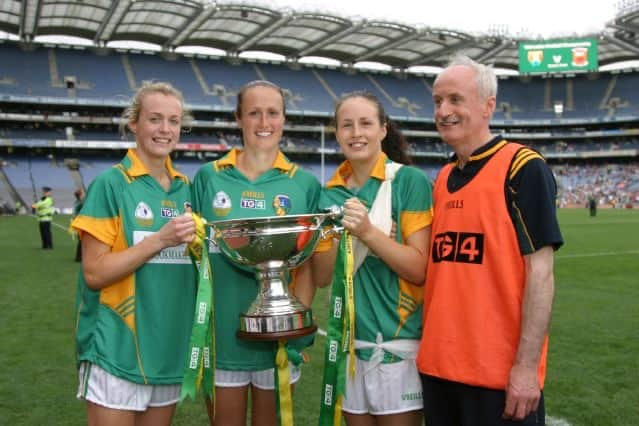
He trained at St Patrick’s College in Drumcondra and returned to teach in Cloone in January 1976. He remained there for 37 years. “Even now, I smile when I recall some of the great days we had in Cloone National School,” he says. Working with colleagues, staff and pupils in his native parish was, he adds, “a rare blessing”.
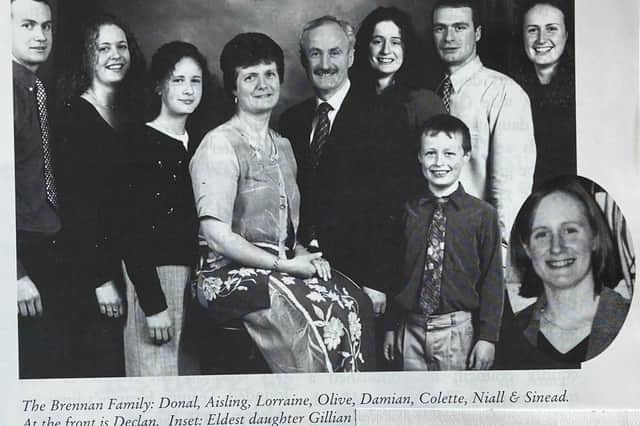
By then, he and Olive were building a life that demanded an extraordinary amount of energy. They raised eight children while Damian taught and served on Leitrim County Council. Together they farmed and ran a manufacturing business, with Olive working full-time in the factory. “She was also covering all the demands of a large family, from trips to Sligo to X-ray football-related injuries to all the other demands of parenthood,” Damian says.
He is quick to name the help that made it possible. Their housekeeper, Mary, was “like a third parent” to the children. The older children helped the younger ones. “So instead of us having eight children, there were ten of us working together.”
Building a place to belong
When Damian returned to Cloone, the GAA club had no permanent ground. The McGovern family generously made a field available, but there were no dressing rooms, showers or meeting rooms. The parish also lacked a suitable building for classes, meetings, children’s activities or gatherings after funerals.
The timing was challenging. Cloone had opened a new Catholic church in 1971, and fundraising had been directed towards paying for it. Even so, the GAA club decided to pursue a park of its own and appointed Damian chairman of its development committee.
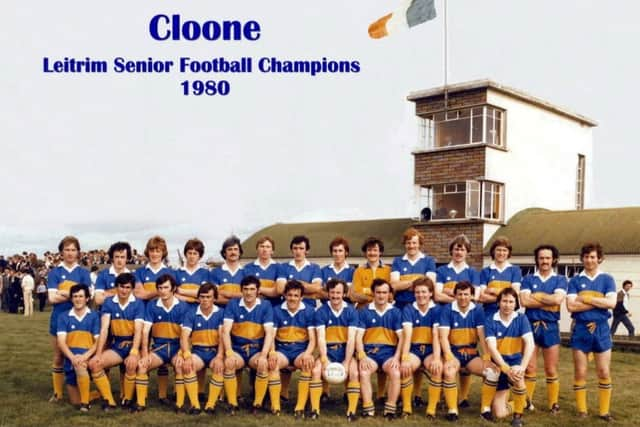
A site was identified and bought. A training scheme provided labour, while local fundraising continued alongside construction. The new football field, dressing rooms and press box were officially opened on May 25, 1980.
Then came the community centre. The old national school was in poor repair and its entrance was unsuitable. Committee members visited centres elsewhere to work out what Cloone needed. They secured a site at the fair green, acquired the adjoining forge, obtained planning permission and began another round of building and fundraising.
On Easter Sunday 1985, the centre opened. “Funding is always a big challenge and it was for us,” Damian says, particularly with the church and GAA park having been built so recently. But the parish backed the proposal.
Four decades later, what pleases him is that both places are still busy. Matches are played at the park day and night. The centre accommodates activities for people from preschool age to old age. Asked what he feels when he sees Cloone now, he answers in two words: “Pride and possibility.”
He points beyond the two buildings to restored stone walls, the work of the Tidy Towns committee, the Garden of Remembrance, Bóthar na Naomh and the walk around Keeldra Lake. Compared with the village of his childhood, he says, Cloone is “unrecognisable”.
His greatest reassurance is the willingness of others to keep improving it. “Above all, it is the knowledge that a new younger generation are interested and committed to carrying on the work that was started fifty years ago.”
A voice for people who needed one
Damian’s entry into electoral politics came almost by accident. Fine Gael asked him to stand for the council in 1979, when he was already involved in the GAA park project and local employment schemes. He had never been active in party politics.
The selection convention was only days away. He went along still undecided. The encouragement from the man who proposed him was hardly stirring: “Ah shur you’re better run anyway.”
Once selected, Damian committed himself to the campaign. He canvassed across the Ballinamore electoral area and spoke outside churches after Mass. It was, he says, “a baptism of fire”.
When the boxes opened, he had 386 first-preference votes. His work in football had made him known across the area, and transfers arrived as other candidates were eliminated.
“I had received a No. 1 vote in every polling booth, so I was confident the transfers would follow,” he says.
They did. He was elected.
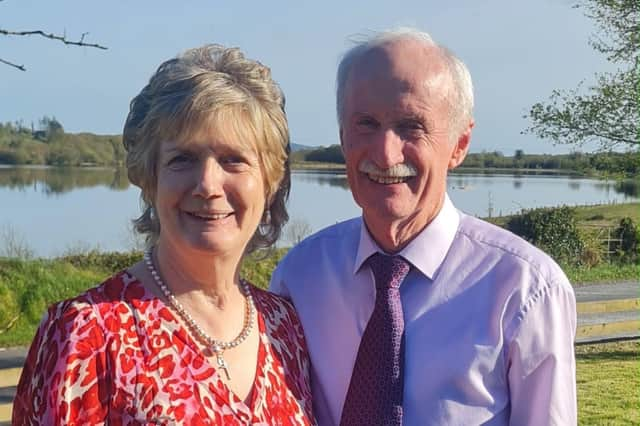
The work he values most from his time as a councillor was often less visible than a building or a road scheme. He remembers sitting with people who struggled to explain their circumstances and helping them make their case.
One example was a father supporting his family through a small farm and social welfare. Damian would listen, help set out the facts and bring the case to the welfare officer. Sometimes the result was an extra ten shillings a week.
“To have those people, and there were many, come back to thank me because they had been approved for an extra ten shillings a week, that was what made it all worthwhile.”
For Damian, representation meant taking seriously a problem that mattered to the person at his door, however small it might look to someone else. It could mean retaining medical care, getting a pothole repaired or arguing successfully for a rural house.
Looking back, he regards his greatest achievement as learning to see each problem from the other person’s point of view.
Reading the votes
These days, many people know Damian for something else: his reading of elections in Sligo–Leitrim. His predictions are closely followed, but he describes a method grounded in evidence rather than any mysterious knack.
Past results are the starting point, though he warns against treating them as a forecast. A swing towards or away from a party can change the picture. So can a new candidate, a retiring one, local issues or the public’s view of an outgoing representative.
Candidate selection matters too. Parties must judge how many names to put on the ballot if they want to maximise their chances of winning seats.
Then come local conversations and, once a campaign begins, canvass reports.
“You get to know what the voter thinks, their priorities, their current state of mind,” he says. “This is the very best of information for a candidate and a campaign.”
An experienced canvasser, he believes, can often sense what a voter really thinks, beyond the polite answer given at the door.
Damian says elections here were once easier to call because the major parties could rely on a familiar line-up of strong candidates. He recalls Fine Gael figures including Joe McCartin, Gerry Reynolds and Frank Feighan, and a formidable Fianna Fáil team that included Ray McSharry, Matty Brennan, John Ellis, Jimmy Devins and Eamon Scanlon.
That landscape has changed. At the last general election, he notes, independents and smaller parties drew almost 20,000 first-preference votes across the constituency. Marian Harkin was elected as an independent, while each of the three largest parties won one seat.
Looking ten years ahead, Damian is careful about claiming certainty. Retirements can free up substantial personal votes, and no party can assume those votes will transfer neatly to its next candidate. But he is willing to make one prediction.
“If I were to make any predictions regarding the future trend in voting,” he says, “it would be the rise of the Independent candidates and a rocky road ahead for the establishment parties.”
He has spent a lifetime watching what people do for their neighbours, their village and their county. For Damian Brennan, the strongest political signal may still be found close to home: in what people need, whom they trust, and whether someone is prepared to do the work.