

Screen Ireland no longer takes risks on filmmakers, director Pat Murphy claims

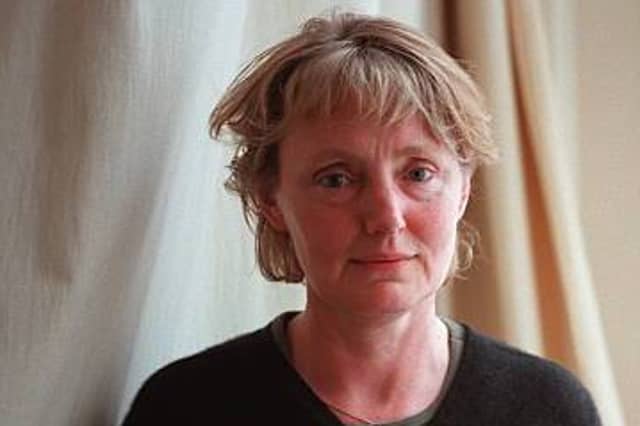

The acclaimed director also discussed bringing James Joyce to the screen and the fight to establish an independent Irish film industry
Acclaimed Irish director Pat Murphy has criticised Screen Ireland for abandoning the developmental role once played by the Irish Film Board and becoming reluctant to take risks on emerging filmmakers. Speaking at the Adaptation Film Festival, Murphy contrasted the current funding landscape with the support available when Ireland’s independent film movement began to emerge.
“The Film Board was set up to support Irish filmmakers, so they supported your development in a way,” she said. “Now I feel, from recent experience with them, that really they’re like someone who wants to be last in and who wants a lot of stuff in place before they will come out.
“The risk they used to take is no longer there. I think it’s a shame.” Murphy said this did not take away from the quality of Irish films currently being produced, but argued that the organisation had retreated from its responsibility to nurture future talent.
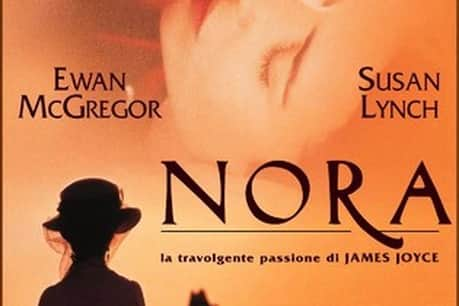
“It really is an abandonment of their development role, in terms of bringing people forward and bringing people up who would be the next generation of filmmakers,” she said. Murphy appeared at the festival to discuss her career and the process of bringing literary and historical figures to the screen, including James Joyce and Nora Barnacle in her 2000 film Nora.
The film starred Ewan McGregor as Joyce and Susan Lynch as Barnacle. Murphy said casting such recognisable figures was not simply a matter of finding actors who resembled them. “You’re not saying, ‘He looks like James Joyce, I’ll have him,’ or, ‘That person looks like Nora Barnacle,’” she explained.
“You’re taking a risk. You’re looking at what they could do with it, where they could take it and what they can bring to the film.” Murphy said she now experiences a sense of distance when watching Nora, more than two decades after making it.
“It’s almost like someone else made it,” she said. “I remember those scenes. I remember the rehearsals for those scenes. But it’s a slightly more distanced relationship to that film.” The filmmaker also traced the beginnings of her career and her decision to leave Britain for New York after becoming frustrated by a culture where filmmakers debated theory but rarely produced work.
“No one made films. We all sat around and thought,” she recalled. “It was at a standstill and I thought, ‘I can’t bear it.’” Composer Philip Glass encouraged her to travel to New York, where she attended the Whitney Independent Study Program and met filmmakers including Kathryn Bigelow and Lizzie Borden.
“They didn’t have a lot of skills right then, quite frankly, but they were making films and were also involved in theory,” she said. “The theory was all being learned while you were making it. I thought, ‘This is my tribe.’” However, Murphy eventually realised she wanted to make films in Ireland.
“I thought, ‘I’m not actually a New York filmmaker. I want to make films in Ireland,’” she said. She returned during a period when there was virtually no domestic funding for Irish cinema. The British Film Institute, Channel 4 and the BBC provided crucial backing for several early Irish productions.
Murphy and fellow filmmakers including Joe Comerford, Bob Quinn and Thaddeus O’Sullivan were determined to establish an independent Irish film practice using Irish casts and crews. “We were hell-bent on the idea of there being an Irish film practice, if not an industry, where cast, crew, everything had to come out of Ireland,” she said.
Murphy’s 1981 film Maeve, set in Belfast during the Troubles, became a landmark work of Irish feminist cinema. She said the decision to make it followed her exposure to the work of other radical Irish filmmakers.
“When we were editing Maeve, Joe was in London editing Traveller,” she recalled. “I remember looking at a rough cut and thinking, ‘This is an incredible film. Whatever is going on, it’s happening in Ireland. I have to go back.’”
She later made Anne Devlin, inspired by the journals of the Irish republican who served as housekeeper and confidante to Robert Emmet. Murphy said she discovered the journals after another filmmaker told her she would never make a conventional film with “a beginning, middle and an end”. “Then someone gave me these Anne Devlin journals,” she said. “I thought, ‘This is what I can do.’”
Despite the creative freedom of making a film entirely within Ireland, Murphy said international co-productions offered a major practical advantage: overseas investors had a financial interest in ensuring that the finished film reached audiences.
“If you don’t have money from other countries, then you have to sell it on your own,” she said. “That’s why it takes about two years afterwards, trawling around festivals and trying to sell it to people.”
She described international financing as “a dance”, with co-producers, sales agents and studios each seeking some influence over the finished film. Murphy also shared practical advice about directing actors, describing casting as one of the most important decisions a filmmaker makes. She said actors can occasionally become overwhelmed by the reality they are attempting to represent. “You have to give them the space to settle and begin again,” she said.
Rather than issuing mechanical instructions, Murphy tries to guide performers through the emotional logic of a scene. However, she recalled once becoming exasperated when an actor refused to perform an action because she believed her character would not do it.
“I leaned forward and said, ‘You’re not her. You’re acting,’” Murphy said. “In a way, it’s the worst thing you can say because you’ve thrown them out of the whole thing. But I had to stop it.” Murphy said directing requires constant judgement, with no single method suitable for every performer. “You have to judge it person by person and figure out what they need from you,” she said. “You learn by experience. You just feel your way.”