

Carrick Hurling Club slams efforts to stop young children from playing hurling

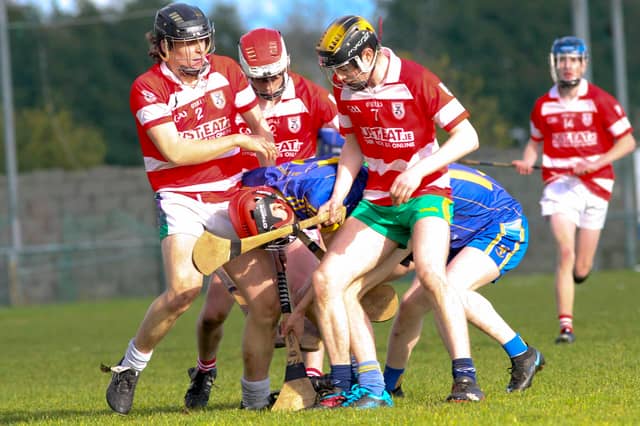

Carrick Hurling Club as efforts to promote hurling at juvenile & adult level being hampered by football clubs discouraging players taking part in the game
Carrick on Shannon Hurling Club have called on GAA clubs to work to promote hurling rather than discouraging juvenile and senior players from taking part in the sport in order to concentrate on gaelic football after a hard hitting post on social media entitled “Wednesday night is hurling night.”
In the post on Facebook, Carrick Hurling Club recounted how players are being forced to miss hurling matches for club football training sessions despite a Connacht GAA motion saying that Wednesday nights are reserved for club hurling activities.
The Club, which draws players from St Mary’s Kiltoghert, Leitrim Gaels, Bornacoola, Annaduff, Eslin, Gortletteragh, Mohill, Aughavas among others, wrote “Keeping one evening a week dedicated to hurling should not be too much to ask. If we want hurling to survive and thrive in our area, we must work together to support those who wish to play both games.”
Carrick Hurling Club became the first and only Men’s team from Leitrim to win a Connacht Club Championship title when they lifted the Connacht Junior crown in 2018 and they supplied the majority of this year’s Leitrim team that reached the Lory Meagher Cup Final.
In the post, Carrick Hurling Club recounted how Leitrim Senior players had been told “not to pick up a hurl until the football season is over” and how young players are told that “if they continue playing hurling, they will never become senior footballers’. One parent told club officials that if his son attended hurling training, he would not be selected for the club’s football team at the weekend.
In comments below the post, former Leitrim Hurling manager Olcan Conway wrote “Well said, Dual players should be admired and protected not forced to feel guilty and made choose” while former Leitrim LGFA official Mary Glancy wrote “Well said, its great that so many young people wanting to play both sports, they should be encouraged to play both rather than having to choose football over the hurling. If it could be promoted more in clubs then maybe in time we will see more hurling clubs in Leitrim.”
Cluainin Iomaint’s Michael Dolan, and former Leitrim player, commented “It’s not a lot to ask. Especially for a county with a small player pool. I could never understand why fellow “Gaels” would discourage participation in our unique & cherished game.”
Conan Cosgrove, in a lengthy reply, wrote “As club representatives, surely our primary objective is to get as many children and people as possible playing Gaelic games and enjoying everything our association has to offer. That means encouraging participation in both football and hurling, not forcing a choice between them. Supporting the dual player isn't just good for the individual; it's good for every club. It keeps participation numbers healthy, develops better all-round players, strengthens our clubs, and helps ensure children stay involved in the GAA for longer. It seems like common sense. I genuinely struggle to understand why anyone would oppose making it easier for anyone to play both games.
“Children are naturally going to try other sports - rugby, soccer, tennis, athletics, martial arts - and that's a positive thing. We can't, and shouldn't, stop them. But what we absolutely shouldn't be doing is putting obstacles in the way of them playing both of our own games. If we're serious about growing the GAA, then our responsibility is to remove barriers, not create them. Every decision we make should encourage participation, not limit it. Well done on posting this. It's a conversation that needs to be had. We can no longer keep avoiding it or burying our heads in the sand. Having these discussions will ultimately benefit both codes”
Carrick on Shannon Hurling Club’s full statement is as follows: “Wednesday Night is Hurling Night - For more than 10 years, we have worked hard to keep all our hurling activities—whether training sessions or matches—on Wednesday evenings. While there are occasional exceptions due to fixtures in other counties, such as Longford, approximately 95% of our hurling activities remain on Wednesdays.
Two years ago, Connacht GAA passed a motion stating that football matches should not be played on Wednesday evenings, with the intention of preserving one night each week exclusively for hurling. Clubs were also encouraged to support and promote hurling participation on Wednesday nights. Unfortunately, this is not always happening in practice. More and more football clubs are now scheduling training sessions on Wednesday evenings at the same time as hurling activities. This is making it increasingly difficult for children, young players, and adults to continue as dual players.
Every week, we receive messages from parents apologising because their child cannot attend hurling training due to football commitments. One particularly upset parent recently contacted us after their son was told that if he attended hurling training, he would not be selected to play football at the weekend. No child should be put in that position. We have also heard of senior players who have proudly represented their county being told not to pick up a hurl until the football season is over. Young players are being told that if they continue playing hurling, they will never become senior footballers. Such messages are unfair, discouraging, and simply untrue.
We are asking clubs throughout our area to take a closer look at what is happening and to ask some important questions:
- Are children and players in your club being forced to choose between hurling and football?
- Are dual players being supported, or are they being pressured to give up one code?
- Are we doing enough to protect and promote hurling in our communities?
Keeping one evening a week dedicated to hurling should not be too much to ask. If we want hurling to survive and thrive in our area, we must work together to support those who wish to play both games - Carrick Hurling Club