

Criminal cases grind to a halt at Carrick court
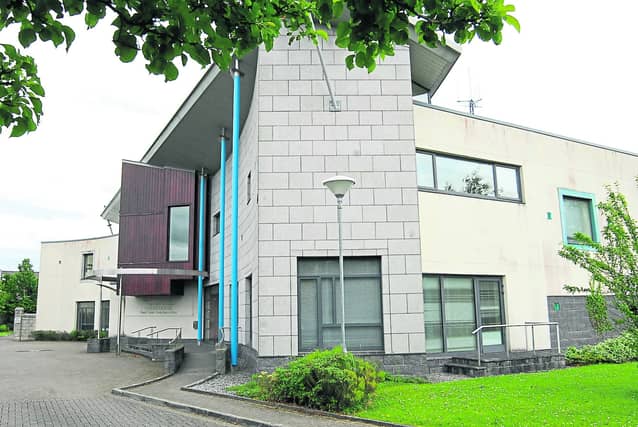

Defence solicitors withdraw representation as dispute with Department of Justice continues
Criminal business at Carrick-on-Shannon District Court ground to a halt on Monday as defence solicitors withdrew from representing clients in protest over the Government's new criminal legal aid scheme.
Case after case was adjourned on July 21 after solicitors told Judge Éiteáin Cunningham they were unable to act because of the ongoing dispute with the Department of Justice.
The industrial action centres on changes to the criminal legal aid payment system. Under the previous scheme, solicitors were paid for each court appearance by an individual client, receiving €239.38 for a first appearance and €59.86 for each subsequent hearing. That has now been replaced by a flat fee of €520 per case, regardless of the number of court appearances required.
Several defence solicitors told the court they had resigned from the criminal legal aid panel and would not represent either legal aid or private clients until meaningful negotiations take place.
Defence solicitor Martin Burke told Judge Cunningham he had resigned from the panel and could no longer represent clients.
"I'm not in a position to assist the court today," Mr Burke said. "I personally have resigned from the legal aid panel, as have many of my colleagues, and my understanding is that criminal defence solicitors across the country are taking the same approach."
He said the withdrawal of services would continue until the Department of Justice engaged with the profession on the issues raised.
Judge Cunningham acknowledged the solicitors' position throughout the sitting and, in many instances, declined to deal with substantive criminal matters in the absence of legal representation.
"I note your position," she repeatedly told solicitors before adjourning cases to future dates.
Dozens of criminal matters—including contested hearings, guilty pleas, sentencing hearings, directions hearings and jurisdiction applications—were postponed, with new dates fixed for October 2026 and January 2027.
Defence solicitor Aoife Kelly also told the court she was unable to represent clients because of the changes to the legal aid scheme and the lack of progress in negotiations.
"We find ourselves in a situation where there's no option but to withdraw our services and also withdraw from the regulated panel," she said. "Unfortunately, we will not be able to assist the court or our clients in this matter today. I hope Jim O'Callaghan thinks of us before he packs his trunks and heads off on his holidays in August."
Judge Cunningham also indicated she was reluctant to issue bench warrants where defendants failed to appear, saying she could not be satisfied they were aware of their court obligations given the disruption caused by the withdrawal of legal services.
However, she granted a bench warrant in one case after Gardaí told the court the accused had left his bail address and was wanted for questioning in relation to other matters. The judge noted that case pre-dated the current industrial action.
Despite the disruption to criminal business, a number of civil and licensing matters proceeded. Among them was an application by Kiltubrid Ladies LGFA, which was granted an online lottery licence after the court heard there was no Garda objection.
The remainder of the criminal list was largely adjourned as the nationwide dispute over criminal legal aid continues.
Speaking about the nationwide dispute, Minister for Justice Jim O'Callaghan said he would not revoke the new legal aid fee system for solicitors and would not bow to political pressure, although he remained open to making "tweaks" to the scheme.
"The ongoing row over the new fees paid to solicitors for their work in the District Court is not about me blaming solicitors," he said.
"Some solicitors think that if they put enough pressure on the system to disrupt cases, that this is going to result in political pressure on me, and I'm going to revoke the regulations. That's not going to happen."