

Have you asked? Could it be Sepsis?

Know the signs and act quickly
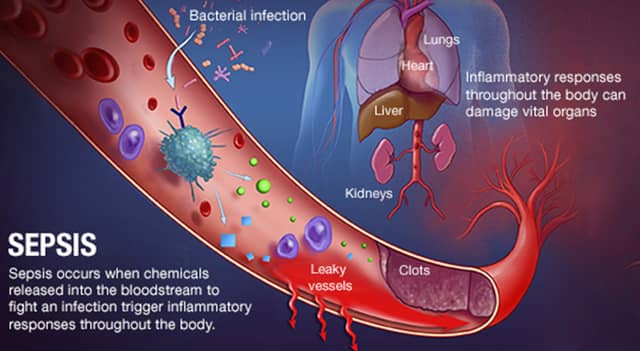
Tomorrow is World Sepsis Day (Sunday, September 13), the HSE is urging everyone to be aware of Sepsis, to be familiar with the signs and symptoms, and to ask the question Could it be Sepsis?
Sepsis can develop from any infection and can affect anyone, but it is more common in the very young, the elderly, people with pre-existing medical conditions or those with a weakened immune system. Sepsis is difficult to diagnose as it can be easily confused with other conditions early on.
Dr Martina Healy, National Clinical Lead, HSE Sepsis Programme said, “The most effective way to reduce death from sepsis is by prevention; good sanitation, personal hygiene, eating healthily, exercising moderately, breastfeeding, avoiding unnecessary antibiotics and vaccinate against vaccine-preventable infections ie. flu vaccine.”
“The next most effective way is early recognition and treatment. This is not simple. Sepsis evolves over time and the pace of its development depends on the patient’s general health status, their genetic response to infection and the characteristics of the infection. Thus, the patient’s characteristics (eg; age, existing medical conditions, medications) represent only one aspect of the pattern. The body’s response and the causing bug also play a part on the clinical course of the illness,” Dr Healy said.
The most commonly reported symptoms of Sepsis include:
Slurred speech, confusion, excessive drowsiness
Excessive sleepiness or drowsiness, confusion
Pain or discomfort in the muscles or joints, passing very little or no urine
Severe breathlessness, a racing heart, shivering, fever, feeling very cold
“I feel like I’m going to die”
Skin changes like pale, cold, discoloured skin or a rash that won’t fade when pressed on
In children the signs to look out for include;
· abnormally cold to the touch
· looks mottled , bluish or pale
· breathing very fast
· is unusually sleepy and difficult to wake
· has a rash that does not fade when you press it
· having fits or convulsions
Also in children under 5;
· not feeding
· vomiting repeatedly
· has not had a wet nappy in last 12 hours
This year, the National Ambulance Service is carrying Sepsis awareness messaging on all its vehicles.
Martin Dunne, Director, National Ambulance Service says, “We are delighted to have the National Ambulance Service participate in sharing this important message to raise awareness of the signs and symptoms of Sepsis. Everyone should know what to watch out for and ask themselves ‘could this be Sepsis’, it could save a life.”