Search


20 Apr 2026
Search
20 Apr 2026

Please allow ads as they help fund our trusted local news content.
Kindly add us to your ad blocker whitelist.
If you want further access to Ireland's best local journalism, consider contributing and/or subscribing to our free daily Newsletter .
Support our mission and join our community now.
To continue reading this article, you can subscribe for as little as €0.50 per week which will also give you access to all of our premium content and archived articles!
Alternatively, you can pay €0.50 per article, capped at €1 per day.
Thank you for supporting Ireland's best local journalism!

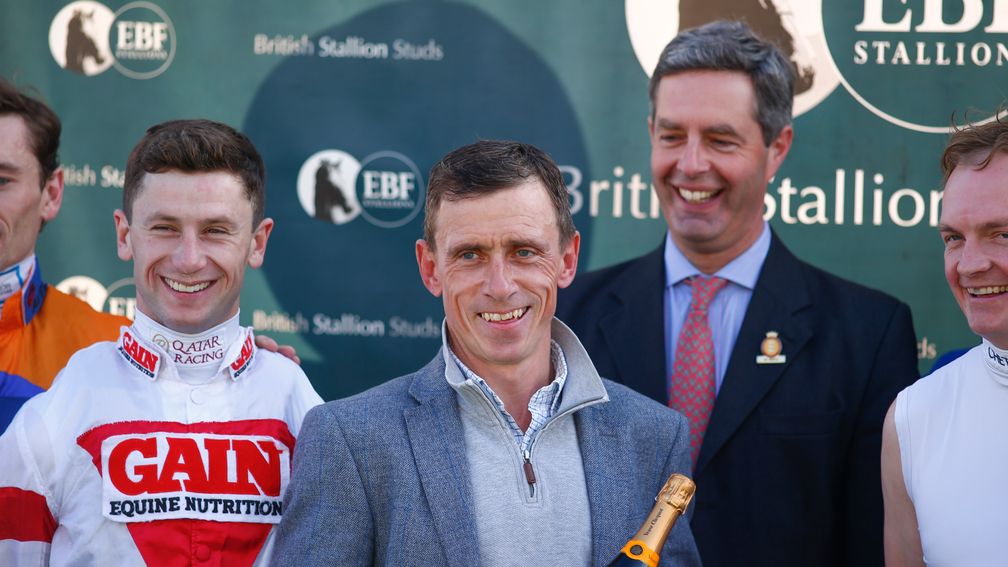
Jockey Shane Kelly

For Shane Kelly, the road out of Cloone began early — and led all the way to racing’s biggest stages. The recently retired jockey left home at just 15 to chase a dream few ever reach. More than 30 years later, he steps away from the saddle with over 1,300 winners to his name, and victories at some of racing’s most prestigious meetings.
Highlights included winning the Yorkshire Cup in 2008 on Geordieland for trainer Jamie Osborne, finishing second to the legendary Yeats in the Ascot Gold Cup the following month, and landing the Wokingham Stakes at Royal Ascot in 2021 aboard Rohaan.
Now 47, Kelly has officially called time on one of the toughest professions in sport — though retirement has not brought a dramatic change of pace. “It doesn’t really feel much different if I’m being brutally honest,” he said. “Obviously, you’re not having to make the weight every day and you’re not having to travel to the races. I’m still working horses and still busy, but not racing on a professional level.”
He admitted the decision had been coming for some time. “I was probably thinking of retiring for the last 18 months before I officially called it time. You just get to a stage where you’ve had enough. I went to the races at 15. I’m 47 now. I think I had a long enough time.”
READ MORE: ‘Major infrastructural problem blocking progress' in Leitrim
Kelly’s journey into racing began when he enrolled in the renowned RACE Academy at The Curragh, one of Ireland’s leading training grounds for future jockeys.
But the roots of that ambition were planted much earlier. “I always wanted to be a jockey from when I was seven or eight,” he said. He first learned around horses close to home while helping neighbour James Mee. “That’s where I started off. He always had horses from day one. That’s basically where I learned my trade until I went to college at 15.”
From the Curragh, Kelly quickly made his mark and became champion apprentice. But a serious fall soon changed the direction of his career.
“The following year I had a fall on the August bank holiday and broke my ankle. That knocked me out of action for August, September, October and November. I missed the end of the grass season.”
With no all-weather racing at the time to help riders get back quickly during winter, opportunities were limited. “I struggled the following year to get going. That’s how I made the move to come to England through Barney Curley.” It proved a pivotal decision.
Kelly moved across the Irish Sea and built a career in one of the most competitive racing environments in the world. He linked up with respected trainers including Jamie Osborne, Luca Cumani and Jeremy Noseda. “I was riding out every morning and freelancing between all of those. They gave me the breaks.”
Success followed. Along with his Yorkshire Cup triumph and Royal Ascot success, Kelly also won the German 2,000 Guineas on Caspar Netscher and rode in both the Irish Derby and the English Derby.
“I’ve been lucky enough to ride some very nice horses,” he said.
Yet one race still lingers in the memory. “I never won the Ascot Gold Cup, but I was placed in it a couple of times. That’s a great race to ride in. If there was one race I could ride in this year, it would be the Ascot Gold Cup.”
While racing is often viewed through the glamour of big festivals and television coverage, Kelly says the reality for jockeys is far tougher. On some of the busiest days, the workload was relentless. He recalled one occasion where he rode 10 horses in a single day across afternoon and evening meetings in Britain.
“You’d be up at half five, on a horse by quarter past six, then race at one meeting in the afternoon and another that night. I often wouldn’t get home until 11 o’clock or half 11.” Laughing, he added: “I didn’t need much rocking that night to sleep.”
Weight management was another constant battle. “The lowest weight I could do on the Flat was eight and a half stone,” he explained. “My natural weight would probably have been nine stone, maybe nine-two. So I’d be trying to be eight-ten or eight-eleven every day.”
That required daily discipline. “I would have exercised between walking and running six or seven miles every day, then sweating in the bath, and maybe having another sweat when you got to the races.” That routine, he said, could happen five or six days a week.
The physical toll of race riding was severe.
Kelly suffered a catalogue of injuries during his career, including a broken femur, dislocated hip, broken ankle, broken back and numerous broken ribs.
“I’m still lucky. I’m walking about,” he said. “A lot of lads unfortunately ended up in wheelchairs. It’s a high-risk job. There’s not many jobs where two ambulances follow you around.”
Then there was the mental pressure. Kelly says jockeys live with uncertainty few outside the sport fully understand.“You can ride a horse one day and things all go right in the race, then the next day the owner doesn’t want you on, or maybe the trainer doesn’t want you on.
“It’s a high-pressure job. There’s a lot more disappointments than there are good days.”
Because racing moves quickly, success can be fleeting. “You probably have to enjoy the good days. I probably didn’t enjoy it enough at the time, but the next half hour is another race.”
As for betting, Kelly always kept his focus firmly on the job itself.
“If people wanted to back my horse, I gave it no thought. If he wins, he wins. If he gets beat, he gets beat. As long as you gave the horse every chance, that’s all that matters.”
Although he has retired from race riding, Kelly remains deeply involved in the sport and is now based in the UK with partner Beth. Together, they run a busy pre-training and breaking operation for Newmarket trainers.
“We’re pre-training and breaking young horses. We’re flat out, very busy. We also have our own horses that we buy and sell, so we’re busy at that all year round as well.”
He still enjoys returning to the big occasions too, with plans to attend Royal Ascot again this year. For a man who spent three decades in one of sport’s toughest professions, some habits clearly die hard. “It was never a job to me,” he said. “It was a way of life.”

Subscribe or register today to discover more from DonegalLive.ie
Buy the e-paper of the Donegal Democrat, Donegal People's Press, Donegal Post and Inish Times here for instant access to Donegal's premier news titles.
Keep up with the latest news from Donegal with our daily newsletter featuring the most important stories of the day delivered to your inbox every evening at 5pm.

This publication supports the work of the Press Council of Ireland and Office of the Press Ombudsman, and our staff operate within the Code of Practice of the Press Council. You can obtain a copy of the Code, or contact the Council, at www.presscouncil.ie, Lo-call 1800 208 080 or email: info@presscouncil.ie.