

Leitrim solicitors working again under Criminal Legal Aid Scheme
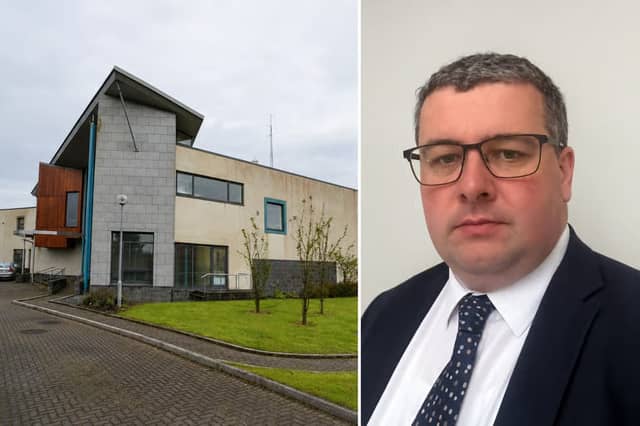

Leitrim solicitors are back to work again under the Criminal Legal Aid Scheme.
The dispute that had taken place since the summer between solicitors and the Minister for Justice, Jim O'Callaghan TD, was resolved on November 11th.
The dispute arose because the minister had imposed a €520 flat fee per case, which was to be paid regardless of the number of times a case had to be heard in the District Court.
Solicitors claimed that the flat fee payment did not take into account complicated cases where multiple court appearances might be necessary.
Minister O'Callaghan had taken a trenchant approach to the dispute.
The High Court ruled on November 3rd that the new flat fee structure imposed by Minister O'Callaghan was “unfair.”
In her ruling, Justice Mary Rose Gearty said that aspects of the new system were “grossly unfair” and “demonstrably illogical”.
An estimated 10 solicitors in Co. Leitrim had withdrawn their services, as well as all solicitors in neighbouring counties, at the height of the dispute.
The consequences of the dispute had included repeated adjournments and there were concerns raised over citizen's access to justice.
Carrick-on-Shannon based solicitor John Anderson, who works with George Lynch and Sons, expressed his relief that the dispute was over, when he spoke to the Observer.
“The dispute had been going on for far too long,” he stated.
“As well as the financial implications for solicitors, there was also the fact that we were unable to help people,” he added.
Mr Anderson accepts that there were flaws with the old system. “At least €15,000 was paid out in one case under the old Legal Aid system. The Minister for Justice was trying to make the system more efficient,” he stated.
The issue of repeated adjournments had been one of the reasons why large amounts of money were being paid out for some cases under the old system.
“The argument by solicitors was that the adjournments were mainly on the state's side,” John Anderson stated.
He went on to praise Carrick-on-Shannon District Court judge Éiteáin Cunningham for her role in reducing the number of adjournments.
“Judge Cunningham has been instrumental in trying to reduce the number of adjournments. If this was followed throughout the country, then the system would be better,” he commented.
The new scheme will involve a payment of an increased flat fee of €780 if the accused faces charges related to two "separate and distinct" cases and €1,040 for three or more separate cases.
The children's cases, domestic violence and custody cases will attract a fee of €780.
The new regulations provided for a flat fee of €520 per accused person, regardless of the number of charges, the connection between the charges or the number of court appearances.
Parts of the new scheme were described as unfair and illogical in a High Court ruling recently.
The judicial review was brought by solicitor John Quinn and the Law Society was a notice party to the proceedings.
Ms Justice Mary Rose Gearty found key elements of the new scheme to be unlawful, ruling that aspects of the system were “grossly unfair” and “demonstrably illogical”.
Talks have been under way between both sides since the ruling was issued.
The department said the flat fee structure would remain and multiple legal aid certificates would no longer be granted for separate and distinct cases.
When Mr Anderson previously spoke to the Observer in September he highlighted a case that was affected by the dispute.
The case was that of a man, who had been in custody since July 12th, who was required to represent himself in a serious case heard in private. “He said himself that he would probably have his time served at this stage, and that is not far off the truth,” Mr Anderson said.
“It is not right that he is sitting in custody with no representation,” Mr Anderson told the Observer.