

Leitrim County Council’s gender pay gap report shows a change worth noting

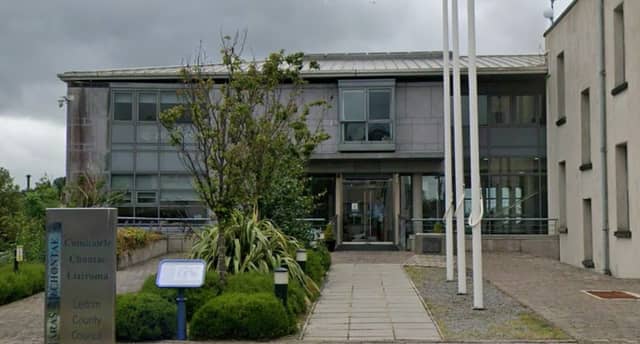

The Council’s fourth year of gender pay reporting reveals a growing negative pay gap, where women earn more than men, driven by female representation in higher-paid positions.
Women earn more than men in Leitrim County Council, according to the local authority’s Gender Pay Gap Report for 2025.
The gender pay gap refers to the difference in the average hourly wage of all men and women across a workforce.
Under the Gender Pay Gap Information Act 2021, organisations with more than 50 employees are required to report on their gender pay gap. The 2025 report marks the fourth year of mandatory reporting.
Published on Thursday, November 27, the report shows a Mean Gender Pay Gap of -5.71 percent, meaning that, on average, females are paid 5.71 percent more than males. The Median Gender Pay Gap indicates that the median rate of pay for females is 16.84 percent higher than that of males.
This does not mean that males are paid less than females for doing the same job; rather, it suggests that females occupy, on average, somewhat higher-paid roles.
For comparison, the 2024 report showed a Mean Gender Pay Gap of -5.4 percent, meaning women were paid 5.4 percent more than men on average in 2024.
Leitrim County Council’s workforce is composed of 64 percent male and 36 percent female employees. Staff categories include general service, fire service, management and administration, and professional and technical roles.
The report also found that the Council’s Senior Management Team has a gender balance of 75 percent male and 25 percent female, while noting the organisation’s active participation in a range of Women in Leadership programmes and initiatives.
In the report, CEO of Leitrim County Council Joseph Gilhooly wrote, “Our people are at the core of Leitrim County Council and we continue to strive to promote and sustain an inclusive organisational culture which provides equality of opportunity and where every employee feels valued.”
He said that employees of the Council have “the same opportunities for recognition and career development and are treated fairly and equitably at work.”
Mr Gilhooly added, “We continue to be committed to addressing workplace barriers to equality, supporting diversity and creating an open and inclusive workplace community. Many equality, diversity and inclusion initiatives and supports are already in place, and we will continue to work in this area as improvement is always possible.”