
Gardai say the fatal incident happened near Kilworth, County Cork on Monday afternoon | FILE PHOTO
Search


24 Mar 2026

Please allow ads as they help fund our trusted local news content.
Kindly add us to your ad blocker whitelist.
If you want further access to Ireland's best local journalism, consider contributing and/or subscribing to our free daily Newsletter .
Support our mission and join our community now.
To continue reading this article, you can subscribe for as little as €0.50 per week which will also give you access to all of our premium content and archived articles!
Alternatively, you can pay €0.50 per article, capped at €1 per day.
Thank you for supporting Ireland's best local journalism!


The Government “will not hesitate” to take further actions on energy prices if needed, a minister has said, as Cabinet signed off on 250 million euros worth of measures.
The Coalition signed off on a temporary excise duty reduction for motor fuels, expansion of the diesel rebate scheme for hauliers and bus operators, and an extension of the fuel allowance in response to rising fuel prices in the wake of the war in the Gulf.
The measures allow for temporary reductions in the rates of mineral oil tax on petrol, auto diesel and marked gas oil (green diesel) which are due to take effect from midnight on Tuesday until the end of May – subject to Dail approval.
This breaks down as 15 cent per litre of petrol, 20 cent for diesel, and three cent for green diesel.
Additionally, the National Oil Reserves Agency levy will reduce from two cent per litre for two months.
Combined, these changes should result in an effective reduction of 22 cent for diesel and 17 cent for petrol – with Government expecting this to be reflected at the pumps within hours.
Meanwhile, the maximum repayment for hauliers and bus operators under the diesel rebate scheme is being increased by 7.5 cent to 12 cent per litre, backdated from the start of the year until the end of June.
The fuel allowance will be extended by an additional four weeks, meaning 470,000 households will receive an additional support of 38 euros per week.
Senior Government figures said different measures may be introduced later in the year if necessary.
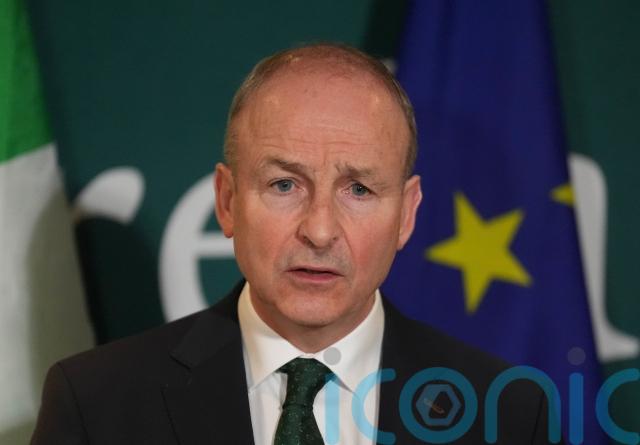
Speaking at a press conference on Tuesday, Taoiseach Micheal Martin said the 250 million euro suite of measures was “targeted”, “temporary” and “affordable”.
He said the interventions would cushion the impact of price shocks for those most exposed and most vulnerable.
Mr Martin said: “All of the measures we’re introducing today are timebound and subject to ongoing review based on market developments.”
He added: “The truth is, we do not know how this war will unfold – no one does.
“But our hope and our contribution to the international debate is for de-escalation and for peace and for the war to end.”
The Taoiseach said there was a need to protect resources for next year’s budget, adding that there were “limits to what Government can do” and that it would “never be in a position of compensating everybody”.
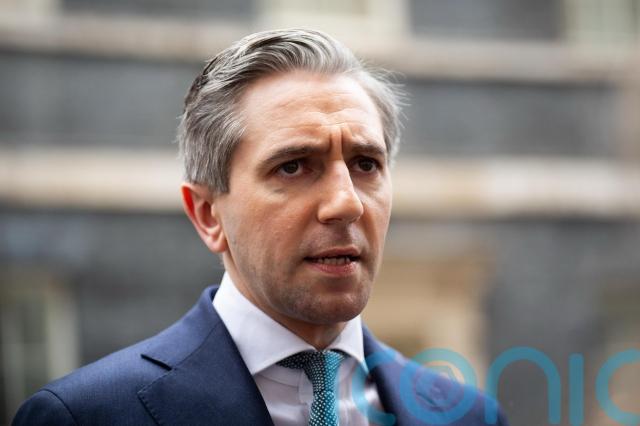
Tanaiste and Finance Minister Simon Harris agreed there was a need to “keep powder dry” as he warned that the trajectory of the war remained uncertain and that a “worst-case scenario” would see a prolonged conflict and “significant economic global consequences”.
However, he argued that Ireland had entered this period in a position of relative economic strength, with full employment, a growing economy, rising incomes and a budgetary surplus.
He said a short conflict would still likely see inflation and reduced economic growth.
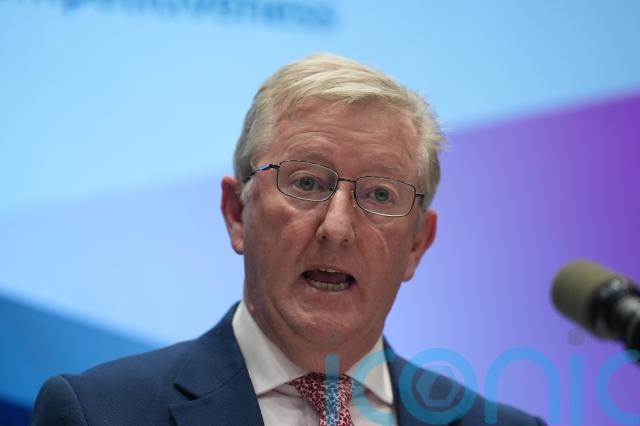
Minister of State Sean Canney, who represents the independents who joined Government, said: “We will not hesitate to take action again if circumstances change.”
Asked if the Government would introduce fuel rationing, the Taoiseach said “measures of that kind” were not being contemplated “right now”.
Mr Canney said that people driving slower would save money and save lives.
Further asked if companies would be encouraged to expand remote working, Mr Martin said everything was being kept under review but such advice was not being given out.
He added that the Irish economy already had a “significant degree of remote working”.
Mr Martin said Government had to “think of the next winter period” and signalled there may be a different approach in the autumn.
Asked about carbon tax increases due to come into place on May 1, the Taoiseach and Tanaiste defended the fundraising measure by saying it pays for retrofitting schemes which help reduce energy bills.
Mr Harris said discussions with industry meant that prices should fall at the “large majority” of service stations within hours.
Earlier, the Tanaiste did not rule out measures to reduce fuel consumption.
Asked if the leaders had discussed measures such as encouraging people to work from home, Mr Harris said: “I think the immediate priority of Government was the fiscal measures that we can take to assist people.
“We will, I think in the time ahead, have to continue to look at what we can do around supply and demand issues, should the conflict continue.”

Subscribe or register today to discover more from DonegalLive.ie
Buy the e-paper of the Donegal Democrat, Donegal People's Press, Donegal Post and Inish Times here for instant access to Donegal's premier news titles.
Keep up with the latest news from Donegal with our daily newsletter featuring the most important stories of the day delivered to your inbox every evening at 5pm.

This publication supports the work of the Press Council of Ireland and Office of the Press Ombudsman, and our staff operate within the Code of Practice of the Press Council. You can obtain a copy of the Code, or contact the Council, at www.presscouncil.ie, Lo-call 1800 208 080 or email: info@presscouncil.ie.