

SPECIAL FEATURE: The Rooskey that was, and the Rooskey that could be


Twenty-five years after fire tore through Rooskey’s Glanbia factory, the village is still asking what might have been and what could happen next. Stella Gordon visits Rooskey to hear from former workers and residents about the community they remember, the changes that followed and the hopes that remain for the future of the former factory site.
The only shop in Rooskey village has now closed its doors.
After 28 years in business, Tighe’s Centra announced that it was closing, bringing an end to one of the village’s last remaining everyday services. In a farewell message, the owners described it as “a lot more than just a shop” – a place where “laughs could be shared, stories could be told, memories could be made”.
Its closure is more than the loss of somewhere to buy groceries. It is another reminder of how much has changed in Rooskey, and of the slow erosion of the businesses and services that once gave the village its sense of activity and community.
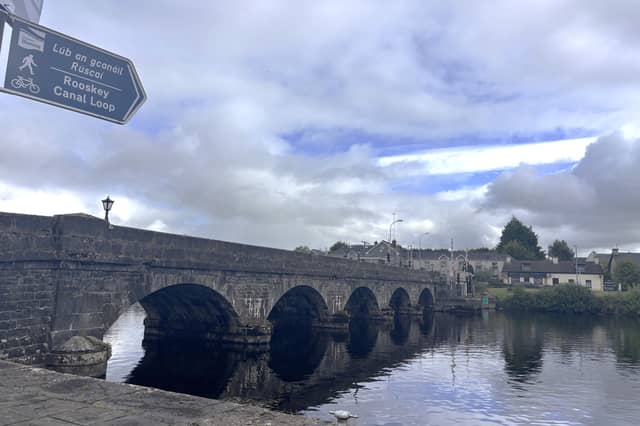
At Rooskey, where Leitrim, Longford and Roscommon meet along the banks of the River Shannon, three counties converge in one small corner of Ireland.
The village, picturesque in its own understated way, is home to more than 800 people. On a midweek visit, it felt remarkably quiet. Cars passed through, the occasional pedestrian walked by, but there was an unmistakable stillness about the place.
As I spent time in Rooskey, however, I learned that it was not always this way. The village once had a thriving economic and social life, before a sudden change more than 20 years ago altered its fortunes.
A Glanbia pigmeat processing plant in the village brought economic prosperity to Rooskey, and with it came a thriving social life. The factory employed hundreds of people directly, while many more depended on it indirectly, providing services to workers and the wider business community.
Business was booming in Rooskey. The hotel was open, pubs were busy and serving food, and cars lined the streets.
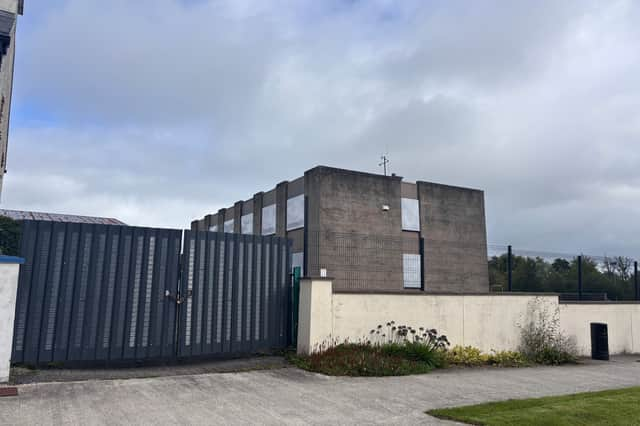
Then, on May 8, 2002, a major fire broke out at the factory, destroying much of the plant. Glanbia initially indicated that it intended to rebuild the plant, but in 2003 announced that it would not do so, and the impact was felt far beyond the factory gates, changing the atmosphere and fortunes of the village.
For John Gerard Diffley, who worked at the factory for 38 years, it was simply “the end of Rooskey.”
In eight months, it will be 25 years since the fire, and it is a wound that is still unhealed. “The factory burned in 2002 but the cannery still worked until 2007. There were about 70 people left doing that. I was there until July 7, 2007,” says John Gerard.
The effects of the fire were not felt only in Rooskey. The catchment area of people who worked at the Glanbia plant was wide, with employees travelling from across Leitrim, Longford and Roscommon, and even as far as Westmeath.
These hundreds of employees contributed to the thriving atmosphere that once existed in Rooskey. Anthony McCormack, another former factory worker who was involved with the Siptu trade union Roscommon branch, remembers a village full of life.
He recalls a different Rooskey. “In eight months time, it’ll be 25 years. Rooskey has been going down ever since. Rooskey harbour this time of year was full of boats, and all summer. The people that were stopping off, they had pubs to go into, they had restaurants.”
Glanbia deployed workers from Rooskey to its plants in Edenderry, Co. Offaly, and Roscrea, Co. Tipperary. Anthony says that people travelled to Rooskey from as far as North Leitrim before taking a bus on to either Roscrea or Edenderry. They put up with the long and difficult commute on the expectation that the Rooskey plant would eventually be rebuilt, bigger and better than before.
“Employees made a huge sacrifice in that way, coming from some of the northern parts of Leitrim and different parts of Roscommon. The employees did that on the expectation that it was going to be rebuilt,” says Anthony.
That expectation came crashing down in 2003, when Glanbia abandoned its plans to rebuild the Rooskey plant, instead upgrading its facilities in Edenderry and Roscrea. Factory workers and residents were left deeply disappointed, with the future of the site remaining uncertain, which remains the case almost 25 years later.
“The fire was the turning point for all of those places because the people working there were keeping those businesses going,” says local resident Seamus Nugent.
“Glanbia guaranteed that it would be reopened within a short space of time. It was a bigger devastation when they put it up for sale.”
The impact of the closure was brought into sharp focus by an anecdote shared by Nuala Diffley. She recalled coming across a French family staying in a boat on the Shannon who had missed the time to get through the locks. “They had a small baby around one year old. The mother was looking to see where she could buy milk. There was nowhere. I sent her to the Weir Lodge.
“They had no car, they were stuck on the boat with a small baby and there was nowhere to get a pint of milk. I’ll never forget it.”
The cannery that remained after the main factory closed eventually shut in 2007, marking the final chapter of Glanbia's presence in Rooskey. At its peak, the plant slaughtered 12,000 pigs a week, with a capacity greater than that of the Edenderry and Roscrea plants combined.
“The other thing that needs to be taken into account is after the factory finally closed, there was a gap left there. Nothing replaced it in any sort of funding or help to revitalise the village. “When Bord na Móna closed up the bogs, there was a Just Transition Fund. There’s millions gone into that, but nothing like that gone into Rooskey,” says Anthony.
“It’s hard to compare what the village was like and the way it is now,” says John Gerard.
Anthony adds, “When you compare it to Tarmonbarry, and even Drumsna and Jamestown - Rooskey would’ve been the superior village by miles and they would’ve been lagging behind. But they’ve all gone ahead of Rooskey.”
Another significant blow came in 2007 with the opening of the N4 Dromod-Rooskey bypass. Of everyone I spoke to in Rooskey, the bypass was consistently mentioned as a major detriment to local businesses. Before it opened, people travelling to Dublin from the Sligo direction had to pass through Rooskey. With the hotel operating at the time, the village was an ideal stopping point for travellers.
Francis McGuire, owner of McGuire’s filling station on the Leitrim side of Rooskey, remembers the impact it had. His parents ran the shop before him, eventually closing it around the time the bypass opened because of the loss of passing trade.
“The bypass was a huge killer for the businesses as well. Especially our shop,” he says.
“Our shop survived after the factory but once the bypass came - the road was once very busy and then it ended up that you could fall asleep on that road and you’d be okay. It went very quiet. I know for us, for my parents, that put the nail in the coffin for them.”
Francis now runs the shop with his brother John, and business is doing well. When I visited, all of the fuel pumps were in use and there was a busy atmosphere inside the shop.
While Rooskey has undoubtedly declined, it is not a story of complete gloom. New businesses and enterprises are supported by the community, and there are signs of potential. A new hair salon has opened in the village, while Lynder’s Holiday Park, Shannon Lodge Nursing Home, a VistaMed facility and Euro Accessories and McGuire’s provide local employment and economic activity. Euro Accessories, in particular, has been expanding, demonstrating the potential that still exists in Rooskey for employment and investment.
Following the factory closure and the opening of the bypass came another major blow: the closure of the Shannon Key West Hotel. Any one of these events would have had significant consequences for a small village. That all three occurred within the space of a decade placed an enormous strain on Rooskey, leaving the community to absorb the impact with little to no support.
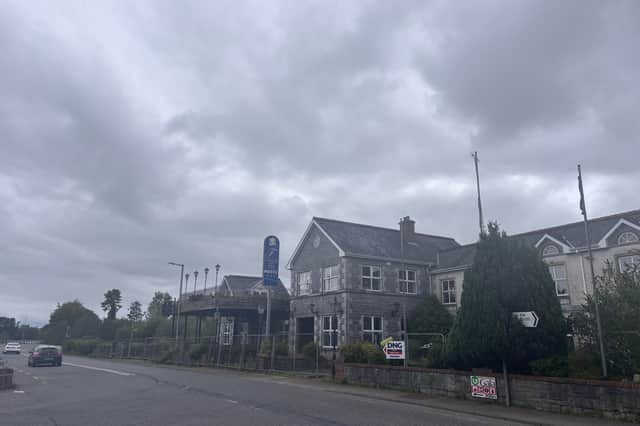
The hotel, which had 39 bedrooms, once hosted weddings, meetings and parties, bringing people into Rooskey and contributing to the life of the village. It has now stood vacant for 15 years, with residents describing the building as an “eyesore.”
Local resident Bridie Killeen describes the contrast between the village’s natural surroundings and the abandoned buildings at its heart: “You’ve got the lovely Shannon, and it’s like a bridge over troubled water with the hotel and the factory.”
The bridge itself has also been cited as an obstacle, although this is not a view shared by many residents. In October 2024, the NTA trialled a two-week shuttle system on the bridge, following which a public survey recorded 84 per cent opposition to the proposal.
For Anthony McCormack, the bridge has never been the problem.
“When you consider the guts of 12,000 pigs slaughtered and produced every week at the factory and they were exported all over Europe, Japan, Australia.
“And when you consider the best part of 600 people working there, people that had to come across - at 4pm there would be a traffic jam - but that was normal. The bridge wasn’t an obstacle and it still isn’t an obstacle,” says Anthony.
Margaret Nugent of Rooskey Tidy Towns echoed the sentiment, saying, “the bridge is functioning perfectly.”
What is clear from speaking to residents is that, above all else, they want to see industry return to Rooskey. They believe new employment would bring wider knock-on effects for the village, creating activity and supporting local businesses.
At the centre of those hopes is the former factory site, which remains a significant presence in the middle of the village. Residents want answers about its future.
“We need to know what Glanbia is doing first. And we need political backing. Either do it up and put something into it, or give the freedom to somebody else to go in the door and lease it,” says Bridie.
There is no shortage of ideas among residents for what the site could become.
“If they don’t want to use it as their own, they should give the freedom to someone to rent it out. I could see like DHL, all these couriers, someone would gladly take it on,” adds Bridie.
“That would introduce movement in the village again and workers, a depot. It doesn’t matter what goes into it. But something needs to go into it.”
Other suggestions include a training centre for apprentices, a space accommodating several businesses, or a community facility. The ideas vary, but the underlying message is the same: residents can see potential in the site, and they want answers about what comes next.
The fallout from the closure of businesses has been evident in the lack of services available in Rooskey. There is no coffee shop in the village and, as Nuala Diffley says, “Right now, there isn’t a shop in Rooskey where you could buy a screwdriver.”
There is a GP, but no pharmacy, despite the village having had one in the past. Residents travel to Mohill, Longford or Carrick-on-Shannon to collect prescriptions. Concerns were also raised about the lack of activities and facilities for young people in the area.
“The population is there but I think we do need more activity and more facilities for recreation and things like that,” says John Gerard.
“For the ones not interested in sport, they could do with something like a youth centre,” adds Bridie.
But there is activity, and there is work being done in Rooskey. The village has a dedicated Tidy Towns Committee, whose volunteers work tirelessly to improve its appearance and have carried out significant work at the former factory site. There is also a thriving primary school serving the community.
Margaret Nugent of the Tidy Towns Committee spoke about the work being undertaken in the face of dereliction in parts of the village.
“There’s public toilets in Rooskey. They’re old style. No electricity, no power, no nothing. We look after them. We open them and close them from March to the last bank holiday in November.
“We’ve had engineers from the Council out in the last few weeks and we’ve been promised they’re going to be done up and electricity is going to be put back in them and they’re going to be upgraded. That will all happen early next year. That’s something,” she says.
“The Tidy Towns water everything,” comments Bridie. “They brighten up an awful lot of corners in Rooskey, but they cannot brighten up every corner. You cannot possibly do it all.”
And, ultimately, much of the conversation returns to Glanbia. Residents believe that if investment and employment return to the former factory site, the wider village will benefit.
“I’d like to see someone come in and see if something could be done with the factory that’s there. It’s not all gone,” says Seamus Nugent. “Until something like that happens, until someone comes into Rooskey with a new idea to bring industry into the place - the only thing that will help it is industry.”
Everything comes back to Glanbia.
“The most important question going forward, is what are the intentions of Glanbia?” asks Anthony McCormack. “That is the most important. Are they going to leave it there and let it rot again, are they going to keep maintaining it or are they going to sell it?” adds John Gerard.
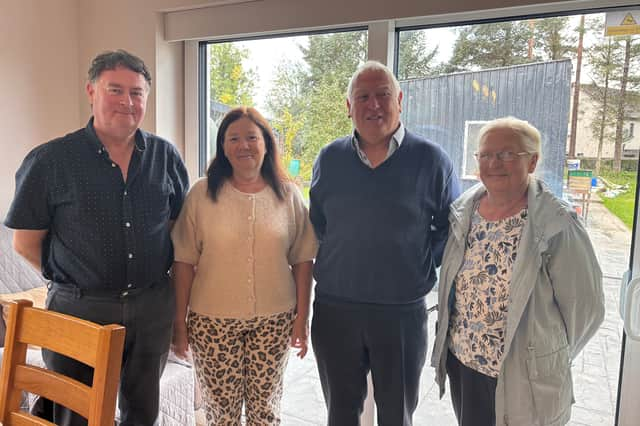
The Leitrim Observer contacted Glanbia for a comment regarding the former factory in Rooskey. In a statement, a spokesperson for Glanbia said: “The former Glanbia site in Rooskey has a long and complex history. Following the factory’s closure in 2002, a range of legal and technical issues have influenced its future.
“We recognise the important role the facility once played in the community and understand local interest in the site. Over recent years, Glanbia has engaged with local elected representatives regarding the site. We remain open to constructive dialogue on matters relating to the site,” the statement concluded.
With the 25th anniversary of the fire approaching next May, residents would love to see something done with the site before then.
“I think it would be nice if something positive could happen between now and the 25th anniversary of the fire, but it’s going to take a drive from people,” says Anthony.
“If Glanbia turned around in the morning and invested and put some sort of plant in there employing people, I think the rest would follow.”
There is something that needs to be made abundantly clear: Rooskey is not all gloom and doom.
The village is beautiful, and it is its people who make it so. There is an active and dedicated Tidy Towns Committee; a community employment scheme made up of “great lads doing great work,” according to Anthony; an idyllic canal walk; and a thriving national school serving a growing population.
When I walked around Rooskey, all I saw was potential. Through everything I learned from my interviews, it became clear that Rooskey had suffered a series of major economic shocks over the past 25 years.
The people here have continued to invest their time, energy and hope in the village, despite everything that has happened.
As Seamus Nugent puts it, “Something’s got to give.”
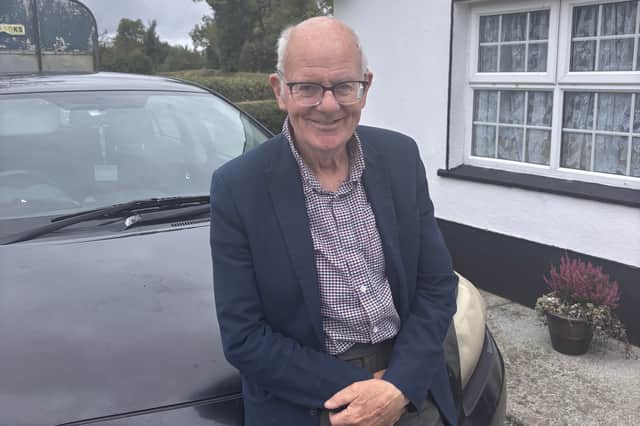
The potential is still there. Rooskey has the people, the community and the ideas to build something again. What remains to be seen is whether someone - perhaps Glanbia - will take the opportunity to invest in that potential.
“You always have to feel hopeful. You can’t live in despair,” says Seamus.