

AI brings promise and concern to Leitrim
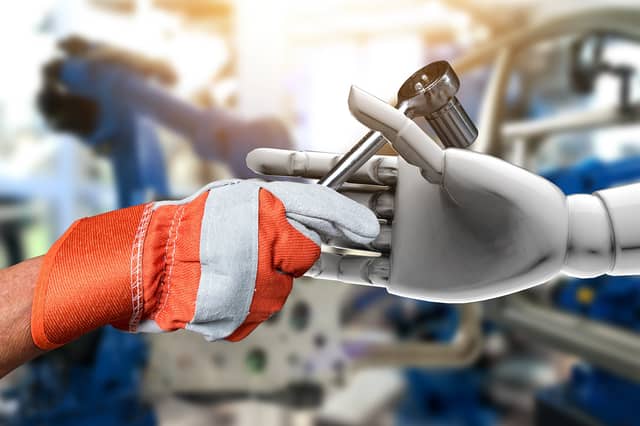

Seamus Morris looks at how local businesses are responding to the AI revolution, with insights from Leitrim Local Enterprise Office on adoption and training, alongside new research examining workers’ concerns about the impact of artificial intelligence on jobs.
Artificial Intelligence is increasingly being used by Irish businesses, but are businesses in Leitrim keeping up with the pace of development nationally?
Recent research commisioned by Google and conducted by Amárach indicate that while many businesses in this region believe that AI can postively impact their business, few of them state that it is actually central to their operations.
The research indicates that while the opportunities afforded by AI are recognised by business in this region, adoption lags.
According to the research, while 78% of SMEs in the midlands, including those in Leitrim, believe AI can positively impact their business, only 14% say AI is central to how their business currently operates.
The main barriers preventing greater AI adoption include a fear of making mistakes (25%), lack of skills (24%) and cost cited by 22% of SMEs surveyed.
The research found strong demand for practical supports and training among business owners, with SMEs saying demonstrations, training programmes and access to tools would help accelerate adoption. Google and the Local Enterprise Office network are providing access to up to 10,000 AI scholarships through Coursera, offering practical training in real-world AI applications including content creation, customer communications and data analysis.
Leitrim Local Enterprise Office (LEO) told the Leitrim Observer that businesses in this county are proactive about learning more about AI and how to adopt it into their operations.
The research found strong demand for practical supports and training among business owners, with SMEs saying demonstrations, training programmes and access to tools would help accelerate adoption.
Leitrim LEO stated that through their engagement with local enterprises, they are seeing demand for both AI-focused workshops and more in-depth training programmes.
“While interest is particularly evident among businesses involved in professional services, tourism, retail, manufacturing and the wider SME community, AI is increasingly being viewed as a tool that can support productivity, marketing, customer service, administration, and business development regardless of sector,” according to Lisa O’Connell, Senior Enterprise Development Officer with Leitrim LEO.
“As a result, our AI-related courses and workshops are open to businesses from all industries,” she added.
Ms O’Connell does not believe that Leitrim businesses are falling behind in relation to AI.
“In terms of national trends, we would not say that Leitrim businesses are behind. Like SMEs across Ireland, many local businesses are at the exploration and adoption stage, seeking practical guidance on how AI can be applied in their operations,” she told the Observer.
“We are seeing strong interest from businesses looking to understand both the opportunities and the responsible use of AI,” she added.
Figures from the CSO back up Leitrim LEO’s belief that local businesses are proactive in relation to AI.
“Recent national data from the Central Statistics Office shows that AI adoption among Irish enterprises is growing rapidly, increasing from 8% of enterprises in 2023 to over 15% in 2024. The figures also highlight a growing awareness of AI’s potential among businesses of all sizes,” Ms O’Connell stated.
Leitrim LEO are running an online workshop called “Using Artifical Intelligence in your business.” It will be held on July 21st. The course is “Designed to equip small business owners with the skills and confidence to adopt AI in their everyday business effectively.”
“The course combines clear explanations, hands-on exercises, and practical guidance, ensuring participants finish with both understanding and actionable skills to integrate AI into their day-to-day business operations,” according to the LEO website.
“Recent national data from the Central Statistics Office shows that AI adoption among Irish enterprises is growing rapidly, increasing from 8% of enterprises in 2023 to over 15% in 2024. The figures also highlight a growing awareness of AI’s potential among businesses of all sizes,” Ms O’Connell stated.
There are a range of supports available through the Local Enterprise Office and their partner agencies to help businesses explore and adopt AI and other digital technologies.
These include:
● Training workshops and seminars, delivered both online and in person throughout the year, covering areas such as AI tools, digital marketing, cybersecurity, automation, productivity software and digital transformation.
● One-to-one mentoring, where businesses can work directly with experienced consultants to identify practical ways AI and digital tools can support their business operations, marketing, customer service and growth.
● The Digital for Business Programme, which provides businesses with an independent digital assessment and roadmap to identify opportunities for digitalisation, including AI and automation.
● Access to a range of follow-on supports and grant programmes which may assist businesses in implementing digital improvements identified through the Digital for Business process.
● Networking events and information session where businesses can learn from experts and hear about emerging technologies and practical applications.
Workers concerned over the future impact of AI
While businesses are exploring how artificial intelligence can support productivity and growth, new research from FRS Recruitment has highlighted concerns among workers about how AI may affect employment in the future.
The 2026 Employment Insights Report from FRS Recruitment found that 45% of Irish employees expect their roles to be impacted or replaced by artificial intelligence (AI) in the future.
The report found that this figure was higher among workers in Connacht and Donegal, where 50% believe AI will either negatively impact or replace their current roles over the coming years.
Comparing the last five years of survey results, FRS Recruitment found that the use of AI in the workplace has grown from curiosity to capability, with more than a quarter of Irish workers now reporting that they use AI regularly in their role.
The report found that 39% of workers in Connacht and Donegal now report using AI regularly or occasionally in their role.
Despite concerns among workers and employers’ expectations that AI will reshape work, the report found that only a fraction of companies in Ireland (3.6%) have so far used AI technology to replace a full job or role within their organisation.
The report states that while businesses anticipate future disruption to the jobs market, large-scale workforce replacement has not yet materialised.
At the same time, the report found that only 24% of companies in Connacht and Donegal currently provide proper AI training to their staff.
Commenting on the report findings, Colin Donnery, Group CEO of FRS Co-Op, said: “Following a cautious approach to hiring throughout 2025, Connacht and Donegal based employers have entered 2026 with more confidence.
“Today’s jobs market has not returned to the frantic conditions of 2022. Instead, it has entered a healthier, more sustainable growth phase where employers are investing selectively rather than hiring at all costs.”
“Perhaps the most significant emerging trend identified in this year’s report is the growing adoption of AI technology in Irish workplaces.
“While concerns about the long-term impact of AI on employment are increasing among both employers and employees, the evidence suggests that its influence is currently being felt primarily through the automation of tasks rather than the replacement of entire roles.”
Lynne McCormack, General Manager of FRS Recruitment, added: “Employment Insights Report reveal a labour market that remains resilient, while also highlighting significant shifts in recruitment, workforce priorities and employee behaviour.
“In this year’s report, we have also reflected and compared the results of our 5 previous surveys.
“Interestingly, employers’ attitudes have shifted substantially in recent years. In 2026, focus has been on staff retention, artificial intelligence, upskilling workers, salary reviews, wellbeing, and pay transparency – the majority of these topics were barely discussed five years ago. This showcases that Irish employers are becoming much more strategic about workforce management.”