

Powered by people: The grassroots revival of Gaeilge in Leitrim

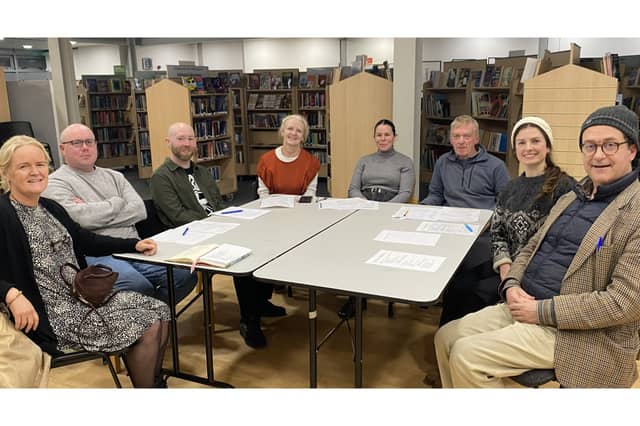

Driven by volunteers, local classes and a renewed interest in Irish identity, the language is finding fresh momentum across Leitrim, bringing new speakers together.
“Is fearr Gaeilge briste ná Béarla cliste” – meaning “Broken Irish is better than clever English” – is a well-known seanfhocal that champions the value of speaking Irish, regardless of one’s level of fluency.
This sentiment has been gaining renewed momentum across Ireland, including here in County Leitrim, encouraging people to embrace the language and use it without fear of making mistakes.
According to Seán Ó Súilleabháin, we are experiencing an Irish language gluaiseacht, or movement, and one that is here to stay.
Seán is secretary of the Ballinamore branch of Conradh na Gaeilge and an enthusiastic Irish language activist. In Ballinamore, Irish classes and ciorcail comhrá (conversation circles), have been running for over 20 years.
However, the movement has since expanded across the county, with classes, pop-up Gaeltachts, ciorcail comhrá and other Irish language events now taking place in towns and villages throughout Leitrim.
“The numbers are bigger than ever now. It’s amazing really,” says Seán. “What’s happening in Leitrim, Longford and other counties is the blossoming of new groups.”
In Ballinamore alone, there are now two classes catering for different levels, alongside two ciorcail comhrá for varying abilities. Another class, funded by Conradh na Gaeilge, is specifically aimed at people from abroad who are interested in learning Irish.
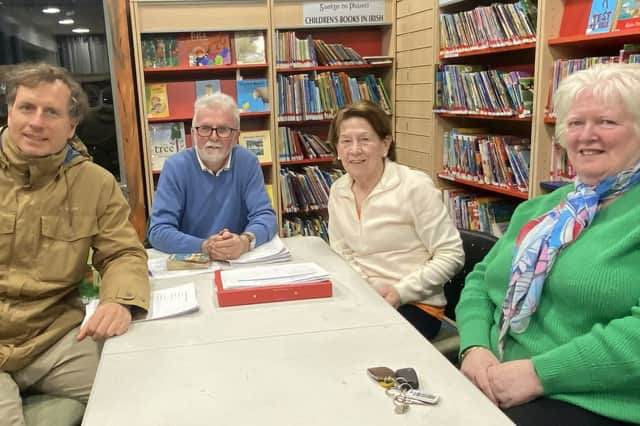
Further afield, there are regular opportunities to speak Irish in Carrick-on-Shannon, Drumshanbo, Leitrim Village, Dromahair, Manorhamilton and beyond, with the language continuing to find new speakers and spaces to thrive.
The Gaeilge gluaiseacht is growing
The renewed interest in Irish is not confined to Leitrim. Nationally, there has been a growing uptake of the language and a renewed sense of connection to Irish identity across all generations.
This can be seen in the success of Irish-language music artists such as Kneecap, the growing audience for Irish-language programmes and even the renewed embrace of cultural symbols, such as wearing the Claddagh ring.
Seán believes several factors have contributed to this growing interest, a trend that has become particularly noticeable since Covid.
“TG4 has done an awful lot,” he says. “In my young days you would never see or hear Irish in this part of the country. Now even if you’re not listening to it, or you don’t fully understand it, it’s still there and you’re conscious of it.”
Seán points to Hector Ó hEochagáin and the late Manchán Magan as examples of people creating interesting programmes that incorporate the Irish language. Figures such as President Catherine Connolly, who speaks Irish so openly, have also helped inspire people.
He also believes that the growing multilingualism in Ireland has been exciting for the Irish language. Hearing people from other countries speak their native languages with such ease has encouraged Irish people to reconnect with their own.
For children in particular, having school friends who speak different languages has helped normalise the idea of learning and speaking Irish.
A new generation finding its voice
Learning the language from a young age is another significant factor, with Leitrim home to two Gaelscoileanna: one in Carrick-on-Shannon, with more than 200 pupils, and another in Manorhamilton, with over 90.
For a county as small as Leitrim, having two Gaelscoileanna is particularly notable, especially when larger neighbouring counties such as Sligo, Longford and Cavan each have just one.
“There’s a collection of children coming out that have a greater fluency than those in normal schools,” says Seán.
More than just learning the language
However, the growing interest in Irish extends well beyond the school gates, with people of all ages embracing the language. From secondary school students attending classes to support their studies, to parents and older people reconnecting with the Irish they learned years ago, and those taking their very first steps in the language, there is an increasing appetite to learn.
Taking up a new language, or even refreshing your knowledge of one you have lost confidence in, can be daunting. However, the classes and ciorcail comhrá aim to provide a relaxed and welcoming environment, where everyone is there for the same reason.
“Everyone’s in the same boat. There’s people making mistakes and no heed is passed,” says Seán, adding that some people who learned Irish in school arrive at these groups describing themselves as complete beginners, only to realise that they know far more than they think.
Keeping the momentum going
The grá for the language is clear, but Seán believes there is still work to be done. As organiser of Tionól Gaeilge Liatroma, an annual event bringing together people involved in promoting the Irish language across the county, he helps facilitate discussions on the language's progress and plans for its further development.
One issue that comes up year after year at the Tionól is the absence of an Irish Language Officer, or Oifigeach Gaeilge, within Leitrim County Council.
The position has been vacant since 2012, when it was last held by Seán Ó Murchadha. With interest in the language continuing to grow across the county, there is an increasing need for greater direction, coordination and support.
“Some councils have them and we’ve been pushing at that for a long time,” explains Seán. “It needs coordination. There are so many activities happening and it’s down to voluntary people like myself at the moment,” he adds.
He points out that the council has several welcome positions, including an Arts Officer, Heritage Officer and Biodiversity Officer, but has had no full-time officer dedicated to promoting the Irish language for the past 13 years.
“There’s nobody full time promoting it in Leitrim. It’s all dependent on voluntary efforts and grants,” he says.
Other barriers Seán believes are facing the resurgence of the Irish language include the decline in native Irish speakers in the Gaeltacht and a general lack of funding, which leaves people living outside Gaeltacht areas with more limited opportunities to immerse themselves in the language.
The cost of attending the Gaeltacht is another significant barrier. Irish is best learned through speaking it, but many families are struggling to afford to send their children to the Gaeltacht for a few weeks during the summer, with three-week courses now costing over €1,000. There are also wider challenges facing the Gaeltacht system itself, including a shortage of ‘Mná an Tí’ available to accommodate students.
“It has a huge impact on youngsters, those two or three weeks in the Gaeltacht. It needs to be funded better to give more opportunities,” Seán adds.
At a local level, however, the Irish language classes and groups running throughout Leitrim are entirely voluntary and completely free, ensuring that those interested in learning the language have access to opportunities within their own communities.
In Budget 2027, it was announced that the Department of Rural and Community Development and the Gaeltacht would receive an additional €4.27 million in current funding to spend on the Irish language and the Gaeltacht.
However, this was accompanied by a €5 million reduction in the capital budget for the Irish language, the Gaeltacht and the Islands.
President of Conradh na Gaeilge, Ciarán Mac Giolla Bhéin, described this as unsatisfactory and said it failed to demonstrate ambition for the language.
“It does not recognise the problems and challenges facing Irish language and Gaeltacht organisations throughout the country, nor does it address the decline in the real value of funding available to Irish-language and Gaeltacht organisations over the years,” he said.
It is a sentiment shared by Seán, who believes greater investment is essential to protect and promote the language.
“The Irish language lost a lot of funding during the recession period but it hasn’t gotten back to where it was and that’s disappointing. It’s starved of funding,” he says.
A language and identity worth protecting
Despite these challenges, Seán’s belief in the importance of the language remains unwavering.
“The main thing is that language is about a sense of identity and it’s a precious thing, really. To me, it’s the gem of this nation, or of any country.”
Looking ahead, Seán would like to see further investment in Irish-medium education in Leitrim, particularly through the development of more Gaelscoileanna and Naíonra (Irish language preschools).
“The difference between children who come out of a Gaelscoil and ones who don’t - there’s no comparison between their fluency and the ease in which they speak,” says Seán.
While every county in Ireland has a Gaelscoil, 10 counties are without second-level Irish-medium education, known as a Gaelcholáiste, including Leitrim.
Despite the challenges and the work still to be done, the times are changing for the Irish language. The Gaeilge movement is gathering momentum and, as Seán sees it, is here to stay. Much of this progress is being driven by grassroots efforts, with people coming together to reconnect with their culture, learn the language and foster a greater sense of community.
Everyone has a part to play
The growing presence of Irish is something Seán notices in everyday life around Ballinamore.
“If I walk up and down the town I’m going to meet several people who are going to talk as Gaeilge. There’s a whole community of people,” he says.
“There’s a sizable population. That is of satisfaction to me, that no matter where I go, I will meet people who talk Irish.
“Sometimes I just throw out a word of Irish. I do that regularly with people I don’t know because you don’t know who knows Irish until you say something. Somebody has to start it,” he adds.
For anyone reading who would like to reconnect with the Irish they learned at school, or perhaps take their first steps in the language, there is an array of free classes and groups available throughout the county. Seán encourages people not to be intimidated and simply to give it a go.
“I say to people to have a go at it, whether you have a little, or a lot, or none, go to an Irish class or a ciorcal comhrá and see how you get on.”
The ciorcail comhrá offer relaxed conversation and do not require attendance every single week, while regular attendance at classes is advisable to help learners progress.
In places with larger groups, such as Ballinamore, classes and conversations are divided according to ability, ensuring there is a level to suit everyone. Wherever people choose to get involved, there is a place for everyone, regardless of their experience or confidence in speaking Irish.
“There’s a huge interest in it there and all of these places in Leitrim are providing that. It’s all free, try it out. It’s all part of our sense of identity to learn a bit of it,” adds Seán.
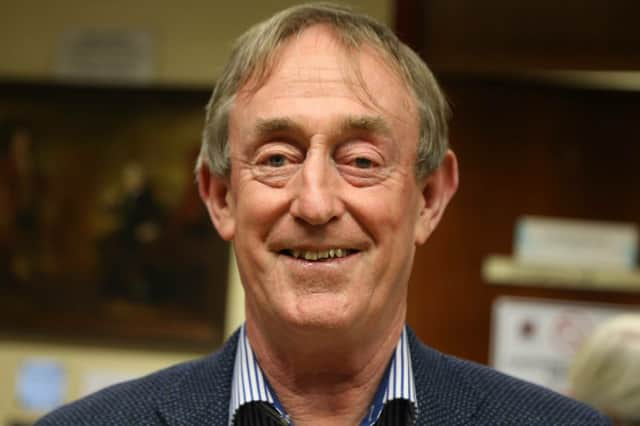
As the Irish proverb goes, “Ar scáth a chéile a mhaireann na daoine” – it is in each other’s shelter that people survive. In Leitrim, it is that sense of community that is helping the language find its voice again.
For more information on Irish language groups, classes, and events in Leitrim, Seán Ó Súilleabháin can be contacted on 087 682 1566.